

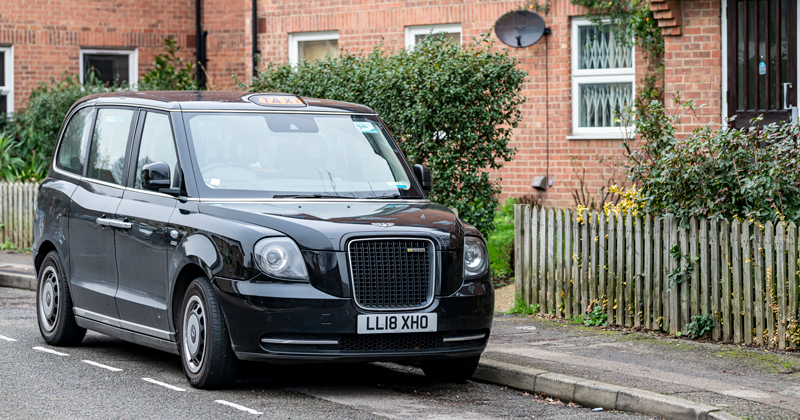
Home-to-school transport should be renamed as it currently causes an expectation of “door-to-door” services among parents, experts have told a parliamentary committee.
Witnesses gave evidence to the parliamentary public accounts committee yesterday, as councils’ annual transport costs have soared to £2.3 billion, and the Department for Education estimates they could exceed £3 billion by 2029-30.
It comes after a recent NAO report found government does not have the data needed to understand who is using the transport and why costs are rising.
Here’s what we learned…
1. The name a ‘huge problem’
Rose McArthur, chair of the home to school transport working group at ADEPT, told the committee the very name ‘home-to-school transport’ is “a huge problem” and causes “parental expectation”.
Local authorities have a duty to provide transport for children who attend their nearest suitable school but cannot reasonably walk there, or who have special educational needs or mobility issues.
But McArthur said transport provision “doesn’t have to be…a door-to-door taxi service”. “It could be home to a bus stop, or a bus stop to here…a walking route to there.”
“I think there’s a level of expectation that’s just built in, and there’s a level of over-provision that’s been built into the system,” said McArthur. She added councils “could definitely use commercial bus services better” and “need education and transport to be working together.”
Committee chair Sir Geoffrey Clifton-Brown added that The Association of Transport Coordinating Officers (ATCO) had warned that “the very nature of the term home school implies it is a door-to-door offer” and “more emphasis needs to be placed on travel assistance”.
2. DfE looking ‘closely’ at breakfast clubs travel
There is currently no requirement for home to school transport to get children to school in time for free pre-school breakfast clubs.
Asked by MPs if this will be made a statutory entitlement going forward, DfE permanent secretary Susan Acland-Hood said: “Any change of policies has got to be for ministers, and we wouldn’t want to…use this committee to pre-empt that.”
Government is piloting its free breakfast club scheme with 750 early adopters.
Juliet Chua, director general for schools group at the DfE, said as part of “a test and learn”, the DfE is “looking closely at the way in which home school transport interacts with [breakfast clubs]”.
3. Lack of entitlement for older teens ‘a problem’
While young people in England must today remain in education or training until age 18, there is no legal duty for local authorities to provide free transport for pupils over 16. It is instead a discretionary service.
Anna Bird, chief executive of Contact, said its research showed 80 per cent of parents with children under 16 feel “their school transport is working”.
“Where it’s not working well…is after the age of 16, where it becomes discretionary service. What we’re hearing is that 70 per cent of families are expecting changes or experiencing changes.”
She said this “has a huge impact on children’s independence…[and] the whole family”.
Contact research shows 40 per cent of the families “had had to give up work to…manage getting their children to school, where transport had been removed”, said Bird.
She gave an example of a 17-year-old with Down syndrome from Birmingham whose transport was cut when he turned 17.
“Same school, same needs…[but] now he’s paying £46 a day in a taxi fee to get to that school.” She said his single-parent family is “now having to shoulder a cost of about £5,000 a year.”
4. More joined-up thinking needed…
Chua said the DfE wanted to ensure a “join-up between transport and education” to ensure transport “is included in planning for a child”.
“We do see instances where actually the transportation aspect is not taken into account,” she said.
“What you see is very long journey times which actually may not have a positive benefit to the outcomes to child. So we think there is a role for better joined up planning.”
5. …and tribunals must consider costs
One MP suggested tribunals held over local authority decisions on SEND “don’t take account of [transport] costs when they make the decisions.”
After a long pause, Acland-Hood agreed: “I think that’s true.”

She said current legislation “does say it’s important that value for money is taken into account”.
But she added: “I think it would be fair to say that in the sort of emerging case law that…tribunals tend to be absolutely focused on the kind of parental preference as the first thing.”
6. Reforms will be ‘responsible and thoughtful’
The National Audit Office has warned that upcoming SEND reforms “need to address home to school transport pressures”.
Acland-Hood stressed she does not wish to “cause unnecessary concern”, adding reforms will be done “very responsibly and thoughtfully with parents”.
She said she is “acutely conscious that there are parents out there have provision for their children that they will be worried about”.
“We…want to be very, very thoughtful…and to work with parents on this to make sure that we aren’t removing really important provision from children.”
She said a key focus of the impending SEND reforms is that “we want really good quality provision for more children closer to home.”












Your thoughts