


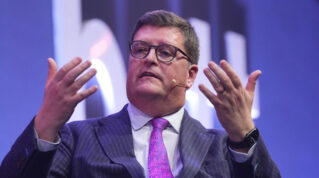
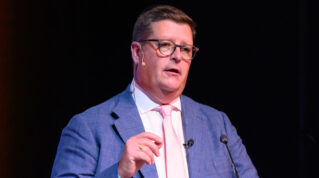
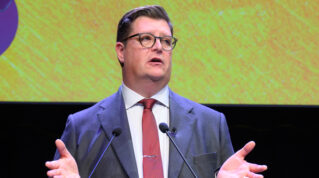
Too many children are “falling out of step with the expectations of school life” through absence, making them “more likely to cross boundaries, challenge teachers” and disrupt learning, the head of Ofsted has warned.
Sir Martyn Oliver also said he was concerned by commentary from education professionals “describing the impact of behaviour and the part it plays in driving too many teachers out of the profession”.
In Ofsted’s annual report, Oliver also said social media and smartphones were partly responsible for disruptive behaviour.
In the watchdog’s new report cards, attendance and behaviour sit together. Oliver said that “in many ways, they are two sides of a coin.
“Too many children are spending too long out of school and falling out of step with the expectations of school life, which makes them more likely to cross boundaries, challenge teachers and disrupt the learning of others.
“This is a huge concern of parents, and always has been. But increasingly we are seeing commentary from education professionals describing the impact of behaviour and the part it plays in driving too many teachers out of the profession.”
‘Schools need to help pupils navigate online lives’
In his report, Oliver warned the “influence of social media, whether by chipping away at attention spans and eroding the necessary patience for learning, or by promoting disrespectful attitudes and behaviours, clearly plays a part” in disruptive behaviour.
Access to social media for young people and mobile phone use in schools “have become perennial topics of discussion”.
Oliver said it was “clear to me that schools need to help their pupils navigate the risks and pitfalls of their online lives, but there is no need to facilitate access on school grounds. Far better to provide children with sanctuary from their mobile devices once the school gates close.”
Oliver said Ofsted “more often than not” saw schools with “good, consistently applied behaviour policies and approaches – and that is reflected in our historical judgments of behaviour and attitudes.
“Where we see schools taking good steps to tackle behaviour issues, we have tended to judge them ‘good’ or better. So, we need to ask the question: if the school is doing all the right things, why is behaviour such a growing concern among teachers?”
Fears over disruptive behaviour
He said that “perhaps the answer lies in the prevalence of lower-level disruption”. He pointed to the DfE’s behaviour survey, which found nearly three quarters of teachers reported that misbehaviour disrupts lessons.
Oliver also pointed out permanent exclusion rates in 2023-24 were the highest on record and suspensions were up by a fifth. Disruptive behaviour is a “huge factor” – driving four in 10 exclusions and five in 10 suspensions.
He argued heads “must have these sanctions available to them, and their use isn’t at odds with inclusiveness.
“There’s nothing inclusive about accepting lowered expectations or putting children’s education at risk because one child cannot behave. The most inclusive schools can and do have the calmest classrooms where all pupils can thrive.”
Severe absence an ‘absolute scandal’
Oliver told a press briefing this morning “we’re starting to see green shoots” of recovery when it comes to attendance, with primary “getting close back to pre-pandemic levels of attendance, secondaries recovering quickly”.
“But hidden within that is the absolute scandal of severe absence…166,000 pupils are severely absent. That is a real issue.
“On top of that…children missing education has risen by 19 per cent – or a fifth – in one year.
“How can that be right? How can children missing entirely from education have risen by a fifth in one year? If that’s not a scandal of attendance, I don’t know what is.”
Ofsted to ‘strike balance’ between policies and reality
Oliver warned that vulnerable and disadvantaged children are “over-represented in the ranks of the severely absent”.
Pupils with SEND and those known to social care are over four times more likely to be severely absent, for example.
He said that under the new framework, he would like to “strike a better balance between evaluating the policies and processes of the school and understanding the realities on the ground for pupils and teachers.
“In particular, using our focus on inclusion to look at how attendance and behaviour policies are working for different groups of children. We need to build a better understanding of the issues, find out what works in the best schools and make sure that insight is shared widely.
“This is one of the reasons for our new ‘exceptional’ grade, where we will find the very best practice and encourage that to be shared across the system.”






This feels like a “wet roads cause rain” understanding of the relationship between attendance and behaviour, at least in secondary schools.
I’ve never seen a pupil come back from a long absence and thought “they have forgotten how they were supposed to act in schools”.
I have *many* times had students whose behaviour is abysmal, lead to them falling behind, leading to a lack of engagement, leading to a lack of attendance.
Behaviour drives attendance, not the other way around.
Unfortunately OFSTED and the curriculum are out of step with what’s needed to motivate, inspire, engage and educate students in the 21st Century
All things teachers have known for years.
At least the new Ofsted Chief is acknowledging the issues. It’s now time to stop berating schools and start assisting and empowering them to address these societal problems head on.
Children near clear, consistent, rational boundaries applied by firm but fair committed professionals. One child cannot be allowed to hijack the learning of a whole class. It makes no sense.
In my opinion he’s got it TOTALLY the wrong way around. It’s schools and the curriculum that are out of step with the needs of children and young people. As the great poet said ‘education is the lighting of the fire, not the filling of the pail!’