

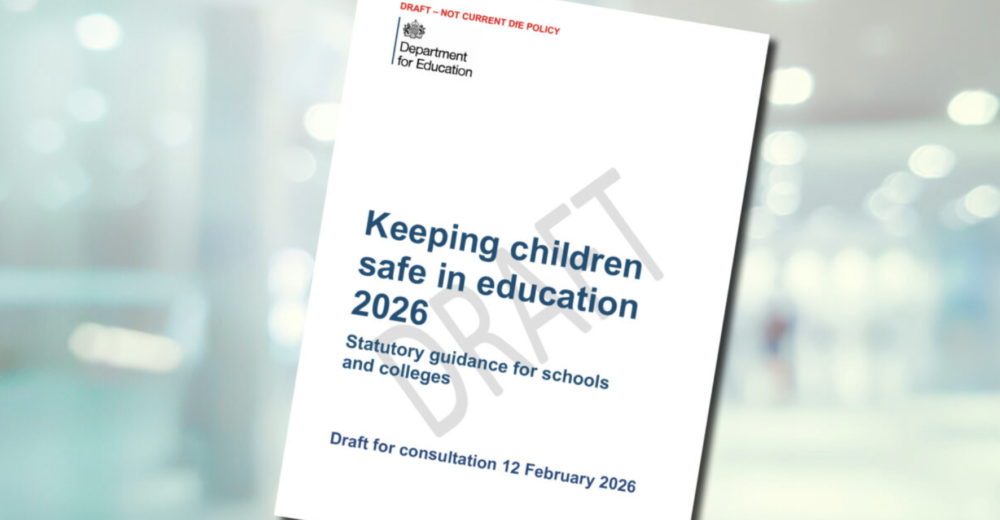
Schools should report concerns about a child carrying a weapon and make sure they review internet filtering system effectiveness at least once a year, draft new safeguarding guidance states.
The Department for Education is consulting on the draft ‘keeping children safe in education’ guidance until April. It would become legally binding if approved.
While the draft guidance includes a new section on children questioning their gender which says schools should take a “very careful approach” to social transition, it also includes other important new proposals for schools.
Here’s everything schools need to know…
1. ‘Very careful’ approach to social transition
The draft guidance contains a new section on supporting children questioning their gender following the landmark Cass review.
The guidance states schools should not initiate any action and take a “very careful approach in relation to social transition, with parents involved in the “vast majority” of cases. Particular caution should be taken in primary schools.
Draft guidance also makes it clear that there should be “no exceptions” for single sex facilities in schools, including toilets and changing rooms, but that schools should “take time to sensitively explain” this to children who are socially transitioning.
You can read more details about this here.
2. Serious violence
Draft guidance states staff should report concerns about a child carrying a weapon, using a weapon or expressing intent to use one to the dedicated safeguarding lead (DSL).
The DSL should then assess the risk and take “appropriate action”, including any action to de-escalate peer conflict.
It also reiterates old guidance that states all staff should be aware of indicators of a child involved in serious violence, with risks higher for children with disrupted education.
“Early, evidence-based support for those considered at risk, as well as in ‘teachable moments’ when issues emerge is vital. This includes access to trusted adults, social and emotional skill support, and, where available, targeted interventions such as mentoring or therapeutic support”
3. Mental health as a safeguarding concern
New draft guidance makes it clear that mental health problems “in some cases can develop into safeguarding concerns”, including self-harm or risk of suicide.
The previous guidance stated staff should be aware that mental heath problems can indicate a child has suffered or is at risk of suffering abuse, neglect or exploitation. Only medical professionals should diagnose a child, it added.
4. Clearer guidance on filtering
The proposed guidance says that schools should “regularly review the effectiveness” of filtering and monitoring systems on school devices at least once every academic year.
Previously, guidance said schools had to monitor the effectiveness of its systems but did not give a timeframe.
5. ‘Deepfakes’ are child-on-child abuse
The draft guidance contains updated categories of child-on-child abuse to reflect technological advances.
This includes “consensual and non-consensual sharing of self-generated intimate images and/or videos including those generated using AI e.g. deepfakes”.
It added misogyny is a form of harmful sexual behaviour, as well as sexual violence and harassment.
It also explicitly states that upskirting is a criminal offence to reflect the law changes.
6. New domestic abuse reporting duty
The draft guidance also includes new details on ‘operation encompass’, the statutory duty for police to notify a child’s school if they believe a child may be a victim of domestic abuse.
It states police should share the child’s name and details, their relationship to the victim or perpetrator, a police reference number, details of the incident and “the voice of the child, such as what they are saying and how they are behaving”.
The draft guidance also states schools must comply with data protection laws during the operation encompass process, which involves sensitive information.
7. ‘Default’ phone free schools
The draft guidance also reiterates stronger rules around mobile phone use announced last month.
It states all schools should be mobile-phone free environments “by default” and “anything other than this should be by exception only”.
Existing advice makes it “clear that the department expects schools to implement a policy whereby pupils do not have access to their mobile phone throughout the school day including during lessons, the time between lessons, breaktimes and lunchtime”, draft guidance says.










Your thoughts