


New national inclusion base peer networks are being launched to help schools share expertise in setting up provision for pupils with SEND.
The Department for Education (DfE) launched the first of its planned peer networks in the autumn, led by London-based Allen Edwards Primary and Acland Burghley Schools, as part of its regional improvement for standards and excellence (RISE) service.
School standards minister Georgia Gould said the networks would “support frontline practitioners so that children benefit from high quality and consistent provision”.
It comes after the schools white paper said all mainstream secondary schools should develop an inclusion base. These could be either a school-commissioned “support” base, or a council-commissioned “specialist” base.
While the first networks are focused on supporting pupils with autism, the DfE said it plans to roll out more with other specialisms.
Meetings take place on a half-termly basis, focusing on topics which have been identified by participants, including curriculum and assessment, staff development and teaching strategies.
Participants range from those who have established inclusion bases to those looking to set one up from scratch.
Inclusion at the heart
Antonios Siorovigkas, who leads the additional resourced provision (ARP) at Acland Burghley School in Camden, said they were chosen as lead secondary practitioner because the government could “see our model and ethos as something that can work for a number of schools across the country”.
While SEND pupils – which make up 26 per cent of the ‘1,200-strong’ cohort – access the ARP for more than half of their timetable, they can also access mainstream classes for subjects in which they excel.
All staff have received specialist training, which puts inclusion at the heart of the school’s ethos, SENCO Billy Pinches explained.
“If ARP is siloed just for students who have an ARP placement, not only are you not being inclusive, but you’re not seeing the wider picture.
“There’s a lot that all students can learn from students with additional needs and vice versa,” he added.
A similar model of inclusion has been adopted at Allen Edwards Primary School in Lambeth, which leads the primary school network for autism inclusion bases. Run by deputy headteacher Nicola Harris, sessions so far have had up to 350 attendees.
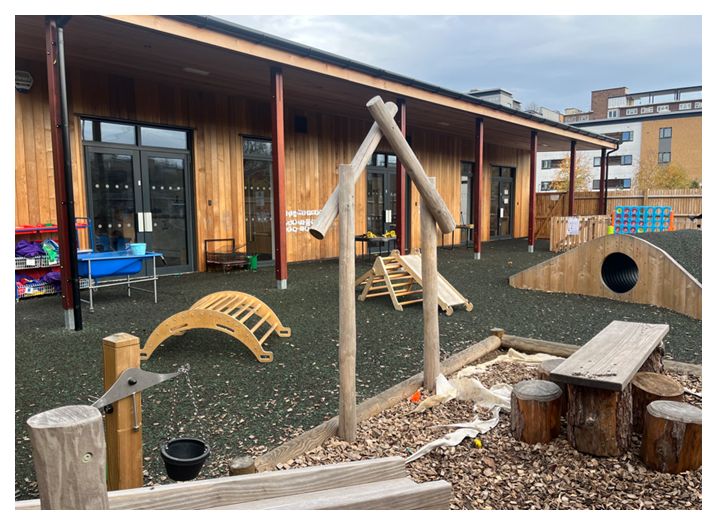
“The only way to make our inclusion base feel part of the school is if it starts with the main school,” Harris said.
Leaders looked at their SEND and behaviour policies and made adaptations where necessary to cater for pupils with additional needs.
Harris said this means they have one model “to meet the needs of our whole community, rather than creating separation of the resource base and mainstream … the aim is to make it be just part of who we are, rather than an add on”.
Unlike Acland Burghley, pupils spend nearly all their time in the resourced provision, learning a bespoke curriculum. But all staff have received autism training and are encouraged to interact with pupils so that “children feel confident as they’re moving around parts of the school and not just their resource-based classrooms”, Harris said.
Support for the journey
Both network leaders said they wanted to share their journeys of creating inclusive practices with schools.
“I think it’s very easy, especially when supporting a network of schools, for us to go and say, ‘this is what we do, and everything works and everything is great’,” Siorovigkas said.
“But actually, it then becomes so much more difficult for network participants to approach and implement all the stages.
“We understand that different schools have different contexts, and they are going to work in a different way – and we want to support schools on that journey.”
Harris agreed that Allen Edwards has “had the luxury of having a bit more time to do this,” but “lots of schools are going to be setting up inclusion classrooms much faster”.
“So, the network is hopefully going to support so that their journey doesn’t have to look so up and down.”
Schools Week asked the DfE how many national inclusion base peer networks were planned to launch, and what specialisms they will be, but did not receive a response.
It comes after the DfE announced an expectation for all secondary schools to have an inclusion base, and all primary school pupils to be able to access an inclusion base, as part of wide-ranging SEND reforms.
The DfE has not said by when schools should have a base. Guidance on how to run the bases will be published in the spring.










Your thoughts