


Newly-appointed headteachers will be offered retention payments of up to £15,000 to work in certain areas under a planned pilot, the government has said.
Education secretary Bridget Phillipson has also said the government will “ensure all schools join high-quality trusts”, and allow councils to set up their own chains. It is not known whether schools will be forced to join trusts, or just encouraged to do so.
It comes after Schools Week revealed government was working on white paper proposals to encourage all schools to join a group.
The upcoming schools white paper will also set out plans to emulate New Labour’s London Challenge with new initiatives in coastal areas and the north east of England.
Schools will face minimum expectations governing engagement with parents, and the white paper will also set an ambition to halve the disadvantage gap and a target to cut attendance.
Government will also explore a new progress measure to “better capture the progress and achievements of children who start secondary school significantly behind their peers”.
The Department for Education has released some of the policies that will form part of its flagship plan for schools, due to be published on Monday. The repeated micro-announcements and leaking of information about the document has been widely criticised.
According to a press release sent this weekend, the white paper will “chart a path to halving the gap between outcomes for poorer children and their peers, alongside generational reform to the SEND system”.
The DfE will also pilot new retention incentives of up to £15,000 for newly appointed headteachers to “work for sustained periods in parts of the country that need them most”. No further details have been revealed.
It follows an announcement earlier this week that school staff will receive eight weeks of full maternity pay.
A date for ministers’ attainment gap ambition has not been set, but the government pointed to the fact that 44 per cent of poorer children achieve at least a grade 4 in English and maths, compared to over 70 per cent of those not receiving free school meals.
Changes to deprivation funding
Schools Week revealed in December how family income data will replace free school meals eligibility as the trigger for pupil premium and other deprivation funding for schools under the reforms.
Today, the government said under its plans, funding could be determined “by a stepped model, ultimately meaning greater levels of investment for schools supporting the poorest children”.
The new model could “significantly rebalance how deprivation funding is distributed to schools, and in turn the level of support that schools with the poorest children receive”, the DfE said.
“The model could take into account how low family income is, for how long this has been the case and the place a child lives.
“It would also remove the need for families to choose to take up the offer of a free meal in order to be eligible for deprivation funding and reduce the administrative burden on schools.”
At present, schools only receive deprivation cash such as the pupil premium for children whose families have applied for free school meals, which is optional.
London Challenge 2.0
Ministers will also seek to build on the “revolutionary impact” of the London Challenge – the Blair government’s school improvement programme in the capital – with two new schemes called “mission north east” and “mission coastal”.
The initiatives will bring together schools, parents and communities to “develop innovative strategies that will deliver sustained improvement and provide a blueprint for change nationally”.
The DfE warned tonight that “for too long, schools have been treated as islands rather than one part of their communities, with the old system focused only on what happens when children walk through the school gates.
Writing in the Sunday Times, Phillipson said she would “finish what the previous Labour government started, and ensure all schools join high-quality trusts”.
“And where they can meet the high standards we set, local authorities will be able to establish their own trusts.”
Phillipson said the reforms were a “golden opportunity to cut the link between background and success – one that we must seize.
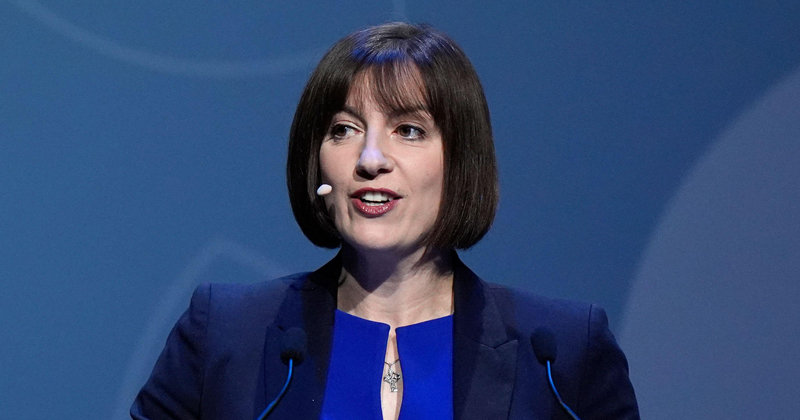
“Our schools white paper presents the blueprint for opportunity for the next generation, with an education system that truly serves every child, whatever their needs and wherever in the country they grow up.”
The white paper will also set an attendance target to recover 20 million school days per year by July 2029, compared to the 2023-24 academic year. This would mean 100,000 more pupils attending school full-time, ministers said.
The DfE has also said it will develop minimum expectations for schools “around engagement with parents, for example timely communication and high quality transition from primary to secondary”.












Your thoughts