


Schools should take a “very careful approach in relation to social transition”, new draft government gender guidance states, with “particular caution” urged in primary settings.
The Department for Education is consulting on draft guidance on supporting children who are questioning their gender, which if signed off would form part of the statutory keeping children safe in education (KCSIE) guidance.
The guidance states that parents should be involved in the “vast majority” of cases in which a child questions their gender.
It comes after the landmark Cass Review of gender care services for under-18s, which found “remarkably weak” evidence around medical interventions in gender care, with a lack of research available.
Education Secretary Bridget Phillipson said the proposed guidance should “give teachers the clarity they need to ensure the safeguarding and wellbeing of gender questioning children and young people”.
‘Very careful’ approach
The guidance states schools should take a “very careful approach in relation to social transition”.
“The Cass Review acknowledged that there is a lack of good evidence on the long-term impact of social transition on young people, but it is clear that social transition should be viewed as an active intervention that may have significant effects on the child or young person in terms of their psychological functioning and longer-term outcomes.”
It adds that primary schools should “exercise particular caution”, and the government would “expect support for full social transition to be agreed very rarely”.
What is in the best interests of the child may be different to the child’s wishes, the draft guidance adds.
‘Don’t initiate action’
Schools “should not initiate any action regarding social transition”, and the guidance only applies where a child or their parent has made a request, it states.
Parents should be involved in the “vast majority” of cases where a child is questioning their gender, and schools should “engage parents/carers as a matter of priority and treat their views with importance”.
In a rare circumstance that involving parents would pose a greater risk to the child than not involving them, the school should involve its designated safeguarding lead.
The first step for schools is to consider what is in the best interests of the child and other children.
“Schools and colleges should consider everything that could be affecting a child, including whether they have any wider health issues or neurodiversity,” the draft guidance states.
‘No exceptions’ for single-sex facilities
Schools must already by law provide separate toilets for pupils aged 8 and over, and separate changing rooms for those aged 11 and over.
The draft guidance states there are “no exceptions” for single sex facilities in schools, including toilets and changing rooms.
It states schools should “take time to sensitively explain” that supporting social transition “will not include allowing access to toilets, changing rooms or boarding or residential accommodation designated for the opposite sex”.
Children undergoing social transition will not be allowed to join PE classes for the opposite sex where there are safety reasons for single-sex classes, the draft guidance adds.
But schools have some flexibility over the use of children’s names.
The draft guidance says “supporting social transition might consider discussing options with pupils and staff such as using names instead of pronouns”.
‘Pragmatic support for teachers’
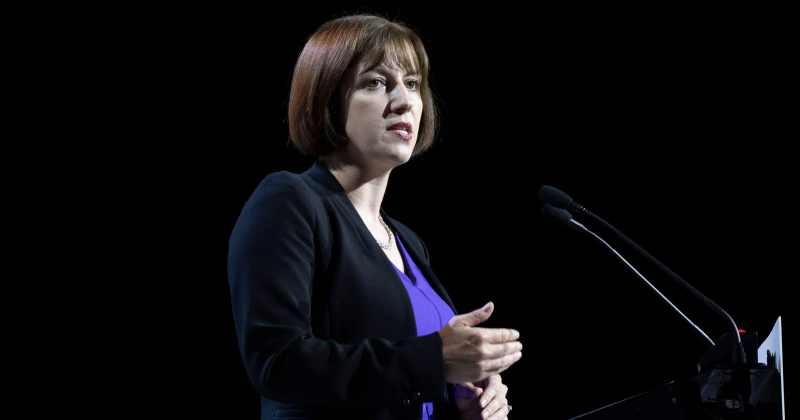
Phillipson said the draft guidance will “give teachers the clarity they need to ensure the safeguarding and wellbeing of gender questioning children and young people.
“This is about pragmatic support for teachers, reassurance for parents, and above all, the safety and wellbeing of children and young people.”
It has also been backed by Dr Hilary Cass, who led the government review into gender care services for under-18s in 2024.
“The updated guidance is practical and reflects the recommendations of my review, giving schools much needed clarity on their legal duties so they can support children with confidence,” Dr Cass said.

Guidance has also been welcomed by school leader unions. Pepe Di’lasio, general secretary of the Association of School and College Leaders, said schools have “done a very good job in dealing with this complex and sensitive issue over the course of many years, striving to create inclusive environments” in an “often-polarised public debate”.
NAHT general secretary Paul Whiteman added that schools “remain focused on ensuring that every child in their care is safe and treated with compassion and humanity”.












Your thoughts