

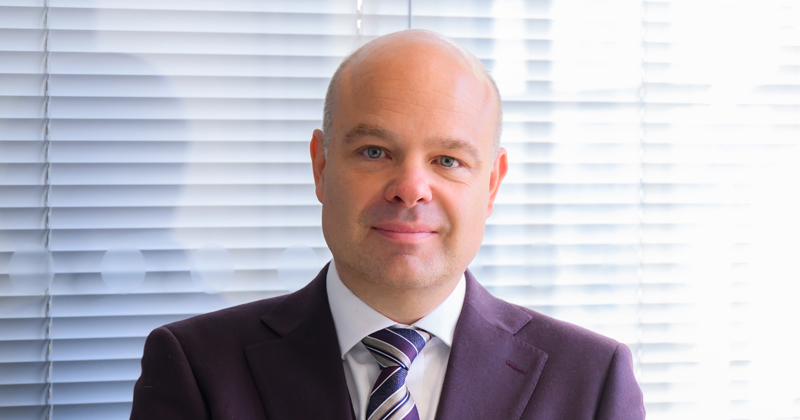
A “turnaround” trust once criticised for controversial behaviour policies has revealed plans to boost its academies’ “emotional intelligence”.
Outwood Grange has been praised by ministers for its track record in improving some of the toughest schools in the most challenging regions.
But it has also been criticised – including by Ofsted – over its exclusion and suspension rates. Critics have argued a turnaround model based on high exclusion rates is “not sustainable school improvement”.
Schools Week revealed accusations in 2019 that Outwood Grange (OGAT) had held “flattening the grass” assemblies, with former teachers accusing the trust of shouting at and humiliating pupils.
Lee Wilson, its chief executive appointed in 2024, previously revealed plans to move away “from a central view” of education and temporarily stop taking on the toughest schools.
Now, speaking exclusively to Schools Week, he has announced the MAT will roll out a framework across its 41 schools to make them more “emotionally aware and intelligent”.
Suspensions tumble
“We’ve got to make sure children want to come to school because they feel that school is part of their extended family,” he said.
“[We’ve got to make sure] they can talk about why they’re finding certain challenges in school, rather than ‘you haven’t met the expectations, [and] there’s a consequence’.”
Figures shared by the trust show it made 98 suspensions per 100 pupils in 2023-24. That fell to 68 a year later.
Wilson, who replaced current Ofsted boss Sir Martyn Oliver at the head of the trust in 2024, expects the rate to fall a further 30 per cent “at least” by the end of this year. So far in 2025-26, the rate stands at 21 suspensions per 100 pupils.
In comparison, the rate nationally was 11.31 in 2023-24, the latest year government data is available for.
New framework
Wilson believes Outwood’s gains will be aided by the launch of the framework.
The document will contain an “audit tool” that will ask heads, among other things, how they offer “a safe space for children to have conversations they might want to have [about what happened] at home that day”.
It will also pose questions about “the language teachers use around the school”.
Examples from across the trust “that have been particularly successful” will also be given. Wilson hopes this will help heads to draw up their own programmes.
The change in approach signals a shift from a “turnaround mindset” to one where it will achieve “sustained success”.
“What this is about for me … [is] to make these schools not just national average schools … [but] exceptional schools.
“We’ve got to empower the group of heads to say when you look at the reasons why children aren’t attending school and … why suspensions happen in your school, the best place for you to have that knowledge is in your school, not in the trust to centrally dictate.”
Scripts and welcome areas
Wilson says the framework will “consolidate” what his schools’ have so far learned from local initiatives and build a set of “common principles” to “guide a more consistent strategy”.
Some of the trust’s schools have already been working “with local educational psychologist services or [the] NHS”. Others have “really invested in emotion coaching”.
This has resulted in some “scripting conversations” for situations that could result in conflict. One example Wilson gives is a child arriving in class late being “welcomed” into the lesson, rather than being “questioned”.
As part of this push, Outwood Academy Ormesby in Middlesbrough recently opened a “welcome hub” in which pupils can collect uniform they may need, eat breakfast and receive support from pastoral staff.
The facility – which is open every morning – has also partnered with a charity to give parents, carers and children toiletries.
But standards ‘the same’
Wilson stresses that the trust isn’t going soft. Expectations of children will “remain exactly the same”, and so will its behaviour policy.
“It’s much more about ‘how can we support you to meet the expectation’,” he says.
Heads also won’t be issued with suspension targets as Wilson does not want “to tie [their] hands behind [their] back.
“We all agree that the best place for children to be in terms of life chances … is to be in a full and successful day in school.
“That’s the challenge we’ve got to set for ourselves.”













“Welcoming” might be a novel idea in mainstream but having worked in both PRUs and mainstream for many years and previously in ROSLA units it was a revelation to see the same students in the different environments: mainstream where they struggled with / rebelled against the regimented silo’d curriculum and fragmented factory model days and in a good PRU where they were supported, welcomed, treated as individuals, actually cooked their breakfasts and followed a flexible integrated, project based approach to learning.
It’s no surprise that over time that many in the PRU environment became exceptional students who made up for often many lost years of learning and disadvantaged lives.
I was once criticised for once writing a project based learning chunk of curriculum, an integrated STEAM curriculum: the critical remark was “You just want the students to have fun!!” and the guy entirely missed how remarkably successful the learning achievements were across the board. My response was “Why shouldn’t learning be fun? ”
In the same vein, why shouldn’t schools be welcoming secure exciting places where all students find learning and socialising fun & relevant to them and their interests?
Schools and the dfe may not yet have recovered from the recruitment of many ex military personnel after ww2 and the services ways of training and mind set they brought with them that tended to perpetuate the methods embedded from the Victorian era, typified by Mr Gradgrind. We would do well to bring Youth Workers into schools to enrich what schools can offer to students