


New Department for Education guidance on parental complaints has urged families to ensure “clear, respectful communication” in a five-step process that says to avoid social media and use AI with “caution”.
Joint guidance published by the DfE, Parentkind and Ofsted introduces five steps to making a complaint, warning the use of artificial intelligence or social media can “make matters worse”.
It comes after ParentKind polling of 2,000 parents found one in four said there had been a breakdown of trust between schools and parents at their child’s school.
Education Secretary Bridget Phillipson said guidance would help “reset the relationship” between parents and teachers while giving families the “confidence to raise concerns”.
Five-step process
The new guidance first urges parents to consider whether they have feedback, a concern, or a formal complaint for their child’s school.
It says formal complaints should be used in scenarios when a parent is “dissatisfied with the school’s actions or lack of action”.
Parents should then consider who in the school to approach.
Guidance says issues “can be best resolved by the person closest to your child”, recommending their teacher or form tutor if the issue concerns something in the classroom, or a senior leader if it involves things like bullying or behaviour issues.
Headteachers should be contacted over “whole-school issues, serious concerns or if earlier steps haven’t worked”. This could concern safeguarding, staff conduct or health and safety issues.
If a complaint is raised, parents should keep a record, stay objective, suggest a clear outcome and be positive.
Parents should also check the school’s policy for timescales, ask for a written acknowledgement and understand that complaint resolution times may vary, the guidance says.
Finally, guidance says that complaints should be escalated to a school’s governing board, the DfE or Ofsted in correct circumstances.
A complaint could go to a governing body or trustees if a parent is unhappy with the school’s response.
It could go to the DfE if a parent is unhappy with the way their complaint has been handled by the school, or if a school has blocked the complaints process.
It adds that Ofsted does not resolve disputes between parents and schools, but may keep complaints on file for inspection.
Use of social media and AI
The guidance also says that using social media and behaving aggressively can “make matters worse” during the complaints process.
It adds that parents should only use AI “with caution” as it “doesn’t always get it right when citing laws and can make a complaint more complex than necessary”.
It comes after a Schools Week investigation found headteachers “aren’t sleeping” due to a huge rise in AI-generated complaints.
Guidance also warns against making complaints “personal to individual staff members” and “building a crowd” of parents in support.
Schools are able to pause complaints, issue verbal or written warnings and ban parents from school grounds in the most extreme cases where parents act unreasonably, it adds.
‘Strong partnerships’
Education secretary Bridget Phillipson said guidance “will give families the confidence to raise concerns, encouraging schools and parents to work together to address their worries in a positive and respectful way”.
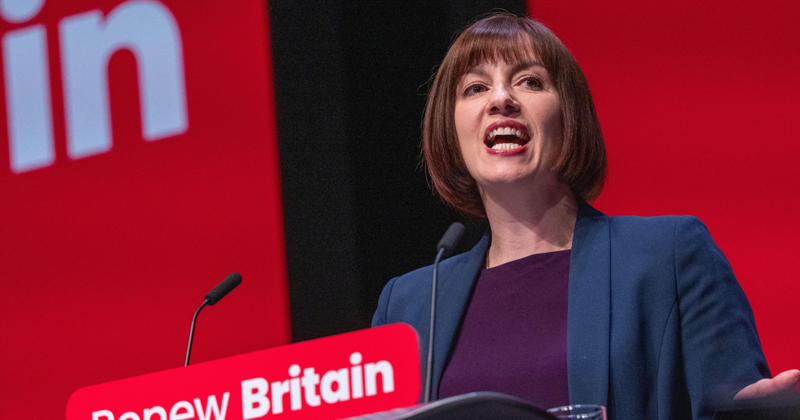
“Strong partnerships between families and schools help make sure children want to go to school and help them get better results,” Phillipson said.
It comes as the upcoming schools white paper will set out improvements to the complaints system to “reset the relationship” between schools and parents, Phillispon added.
Ofsted chief inspector Martyn Oliver said: “It is always better for all involved when complaints can be resolved directly between a parent and their child’s school, without things spiralling onto social media or relationships becoming unnecessarily heated.
“And in the vast majority of cases, issues can be fixed quickly and civilly without any need for escalation to Ofsted.”
Paul Whiteman, general secretary of school leaders’ union NAHT, said while there are many cases of “extremely positive” relationships between parents and schools, processes “must be used appropriately”.

“We welcome the focus of this guidance on solving problems in a positive manner, and particularly welcome the advice to parents to keep complaints away from social media, and to not to use AI to draft complaints,” Whiteman said.
Guidance has also been supported by 13 education bodies, including the National Education Union, Association for School and College Leaders and the Local Government Association.


Hello – where is this guidance as I cannot find it on Ofsted, DfE or Parentkind’s homepages or via searching?
Many thanks