
Plans to run more than 100 academies could leave the country’s biggest trust “spread thin”, a former academies minister has warned.
United Learning (ULT) this week unveiled proposals to merge with south west chain Authentic Education.
But the move has reopened debates over size, and prompted calls for ministers to order the largest multi-academy trusts (MATs) to draw up models for “servicing and working” with local communities.
National Education Union boss Daniel Kebede said: “In its recent white paper, the government set out its ambition for MATs to be geographically coherent. ULT schools are scattered across the country.
“The merger demonstrates the need for greater government oversight of MATs so that their private aims fit within the society’s needs for the education system as a whole.”
United Learning ‘not huge’

Jon Coles, ULT’s chief executive, has already been interim leader of Authentic’s since November, after former CEO Fay MacRitchie’s departure three months earlier. The merger will see 96-school ULT grow to 109 academies.
Coles said two years ago his trust was “not a huge organisation” compared to other sectors.
Noting that the largest universities were “two-and-a-half times our turnover financially”, he argued the sector needed to “recalibrate” its understanding of what big is.
“There are 2,000 trusts in the system – that’s not a sensible way to run a public service. I think the system as a whole would be a great deal better if the average size of a trust were significantly bigger than it is at the moment.”
Size less key for Labour
Last month’s white paper revealed government hopes for all schools to join or form trusts.
It noted chains “should be large enough to optimise benefits in terms of driving pupil progress, estates planning and financial resilience”.
Unlike previous governments, Labour ministers have not expressed set views on size or set deadlines, however.
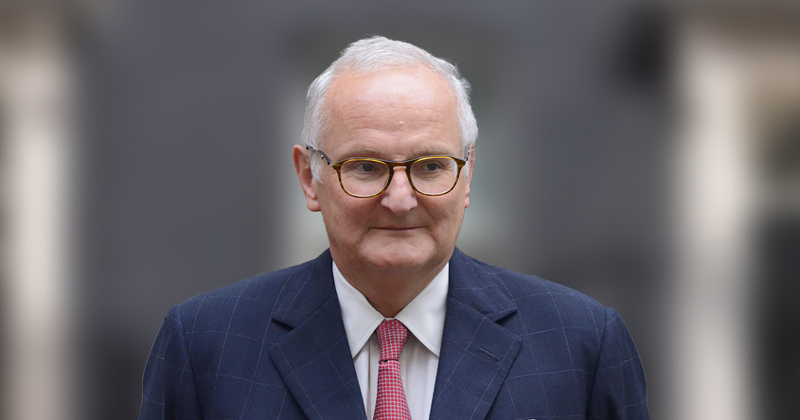
Former minister Theodore Agnew, who also chairs the Inspiration Trust chain, said he “was very cautious about allowing MATs to get too big too quickly” in the early academy era.
He suggested the sector was then commercially “immature”, with high levels of financial incompetence, or at least naivety”.
Average trust has over 5 schools
But in 2016, David Carter, the then-national schools commissioner, called for smaller trusts to run up to 20 schools. He said trusts with fewer than six academies would “struggle to be sustainable”.
The Conservatives then told all schools to start joining MATs by 2030, and trusts to work towards having at least 10 schools. Both policies were eventually dropped.
Pepe Di’Iasio, general secretary of school leaders’ union ASCL, backed Labour’s approach.
“Expansion is certainly a challenge as trusts have to scale up central services and ensure there are strong governance structures. But this is a matter of how trusts organise themselves rather than a question of how many schools is the right number.”
Confederation of School Trusts boss Leora Cruddas said there was no “single, optimal size”. There is “room in the system for a range of approaches”.
Government data reveals trusts now average 5.6 schools, up from 3.6 in 2021.
‘Schools benefit from clusters’
Agnew noted that the system is now “much more stable”. Many large MATs are “highly competent”, and able to “hire the very best commercial people from the private sector”. But his “only reticence” is around geographic proximity.
ULT “is spread thin across England which means it loses the benefits of inter-school collaboration. [But] I am sure they would argue differently.”
But United Learning said the merger would mean it had 19 schools across Bournemouth, Poole and Weymouth.
“This continues our policy of building clusters of at least 3 to 5 schools of the same phase within half an hour’s journey time of one another – precisely so that all our schools and colleagues get the advantages of geographical proximity.”
The trust also said its scale meant it had “exceptional teacher training for 400 new teachers each year in our own group and for other schools and trusts”, as well as early career training for “many hundreds more” and leadership training.
The white paper said “quality and geographical coherence” will be priorities in new guidance. More details and partnership are promised to ensure “a vibrant landscape of coherent high-quality, innovative trusts across each area”.
Government will “welcome dialogue” with MAT chiefs about whether isolated trust schools might be better served within a more geographically coherent” chain.
Jonny Uttley, a former trust CEO, said government should “give a very clear steer on locality”. Trusts should have either “clear community coherence” or a “clear model” for working in and servicing local communities.










Your thoughts