
Councils are spending up to four times as much per pupil on private special schools as state special schools, with private placement costs growing twice as fast over four years.
The findings of a Schools Week investigation come as the government gears up to rein in spending on private special schools.
Analysis of freedom of information data by Schools Week from 41 councils found the average cost per pupil of places in local independent and non-maintained special schools is forecast to be 37 per cent higher this year than in 2022-23.
Over the same period, the cost of state special school places is due to rise by 17 per cent.
According to data obtained from 51 councils, the average forecast per-pupil cost for private or non-maintained placements in the same council area this year is £57,074. This rises to £65,528 for placements in a different council area.
The state special school equivalent is £23,907.
It comes after the schools white paper’s proposed SEND reforms outlined plans to rein in spending on private special schools via measures including a new banding system.
The consultation report warned that “some placements” in independent special schools are “contributing to unsustainable financial pressures” on councils “without clear evidence they are leading to better quality support, outcomes and value for money”.
There are three types of special schools: state special schools, independent special schools and non-maintained special schools, which are private but do not turn a profit. Under the proposals, all special schools will be subject to the new funding bands.
FOI responses illustrate the disparities highlighted in the SEND consultation.
Huge disparities
Placements by Essex County Council in independent and non-maintained special schools were forecast to cost on average of £89,000 per pupil this year, compared to £20,600 in state special schools.
Essex council said its private placements “provide services as part of a package built around the child’s needs” which can’t be met by mainstream schools.
“This, along with additional support for one-to-one assistance, overnight care, specialist trained staff and smaller classroom sizes means the cost of these placements will continue to increase with inflation.”
In Newham, private and non-maintained placements are set to cost an average of £83,000 locally and £134,000 outside the borough this year, compared to £43,000 for state special school settings.
Newham council said it supports reforms that increase specialist capacity, strengthen inclusive support in mainstream schools and bring greater transparency and consistency to specialist placements.
163% rise
Other councils reported huge expected increases in private place costs compared to state. Oldham’s average spend on out-of-area private and non-maintained placements is set to balloon by 163 per cent between 2022 and this year.
The increase for local private places is set to be 130 per cent, while the increase for state special school places is forecast as 10 per cent.
‘We are concerned that we’re seeing public funding being diverted away from children’s outcomes’
Mohon Ali, Oldham’s cabinet member for education and skills, said “reasons cited” for the rapid growth of costs include inflation, staff costs and complexity of needs.
The council would welcome a “national framework” to make the cost of specialist provision “clearer and more consistent”, he said.
Blackburn’s spend on in-area private placements is forecast to rise by 145 per cent over the past four years. The change for state places is 13 per cent. The council was approached for comment.
Ballooning costs
The consultation provided little detail on the cost banding proposal, which follows years of concerns over the ballooning costs of private placements.
“We are concerned that we’re seeing public funding being diverted away from children’s outcomes and into profiteering,” Heather Sandy, chair of the inclusive education policy network at the Association of Directors of Children’s Services (ADCS), said.
“Not all cases, not in all settings – but we are concerned that we’re seeing that.”
She highlighted the role of private equity investors, given the large profit margins they have made in the children’s care home sector.
“That escalation in the charging of fees is possible because there are multiple children for every place,” she added, “and, if they want to sell at a high price, they’ll be able to sell at a high price.”
No ‘profiteering’
Accusations of profiteering are strongly refuted by the National Association of Special Schools, which represents many independent specialist settings.
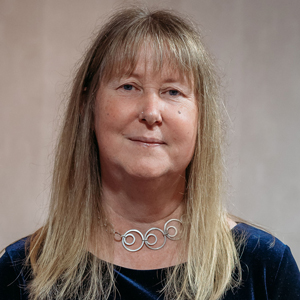
“I accept that there is profit-making,” said its chief executive, Claire Dorer. “I accept that there are one or two providers that appear on the face of figures to have a high profit margin.
“But ‘profiteering’ suggests that they are whacking up the price per student on the basis of there being more demand than there is supply.
“And I haven’t seen good evidence of that.”
Dorer said profit margins need to be examined over many years in order to demonstrate profiteering.
“Typically, firms have years where they have higher profit, then years where they have much lower profit … I would be quite open to there being more scrutiny.
“The bit that I think is problematic is the rushing to the language of profiteering in the face of really very limited data.”
Unintended consequences
She argued against comparing per-pupil costs in independent and state special schools, partly as state special schools are “chronically underfunded” and therefore “not a benchmark of virtue”.
Campaigners also fear a banded cost structure could have unintended consequences.
“There’s a real risk that the profit-making entities exit the market in a rapid and disorderly fashion,” Matt Keer, of Special Needs Jungle, said.
“I suspect it’s not just going to drive excessive profit out of this sector – there’s a risk that it could drive some fairly unique charitable non-profit-making provision, that the state has not chosen to replicate, out of the sector too.”
Exposed settings
He warned that settings which cater to “low incidence, high need” disabilities, such as vision or hearing impairment, could be most exposed because the needs are not common enough to make dedicated state special schools viable in most council areas.
It will also be difficult to agree how much funding should be attached to each type and level of need.
Keer’s research shows huge variations in the top-up funding paid by councils for different categories of SEND, creating a postcode lottery for education providers.
“The approach is very much about standardising cookie-cutter shapes of provision,” he added, “and we’re talking particularly at the complex end here – children whose multiple interlocking needs sometimes literally defy categorisation.”
Dorer said a banding system will need input from both SEND experts and economists to decide what level of surplus needs to be built into placements to keep services sustainable and developing.
She said similar funding schemes had been tried before, such as the Learning and Skills Council’s post-16 high-needs funding matrix in the 2000s.
“Over time the more complex students got pushed off-matrix and were basically spot purchased one-to-one because the funding did not cover cost,” she said.
Proposals ‘rushed’
Simon Knight, joint headteacher at Frank Wise School, a state special all-through school in Oxfordshire, supports moving towards “greater equity of resource allocation”, so that comparable needs are funded with comparable resources.
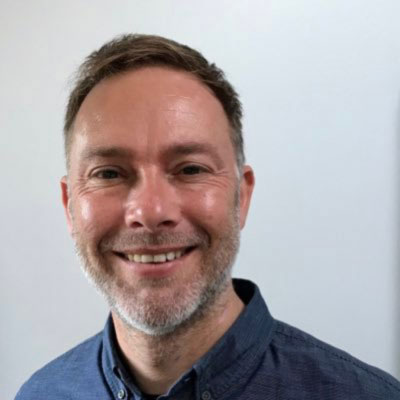
“A national funding system has the potential to achieve this,” he said, “but it will require careful thought to ensure that implementation reflects the range of need that organisations support, minimises the incentives to catastrophise the child for financial benefit and limits bureaucracy, while also creating greater predictability of funding.”
The Department for Education is planning to launch a market analysis to underpin its proposals.
But Dorer questioned why the analysis did not take place before the plans were published.
“What if your market analysis doesn’t fit your stated policy? It feels rushed, it feels ill considered, and it feels political, rather than thinking about the system we want to end up with.”





Your thoughts