

Government SEND reforms don’t go far enough to force health services to deliver support, experts have warned.
MPs warned ministers last year the health sector played a “more passive role”, with schools and councils “shouldering most of the responsibility” on SEND.
The education committee said the “limited engagement” of health services in the current system “stems from a lack of robust and enforceable accountability mechanisms”.
The white paper thrusts schools into the driving seat of government’s reforms, prompting questions on whether health services will also face further scrutiny.

Anna Bird, chair of the Disabled Children’s Partnership, said the organisation had some “real concerns” about how far the white paper “goes on health”.
Speaking at a health and social care committee hearing this week, she said: “There aren’t any new rights to health provision in the package of reforms. There hasn’t been an overhaul of health accountability in the proposals.
“I think it’s a bit of a mark that health hasn’t been as much around the table as we would’ve liked during the development of the proposals.”
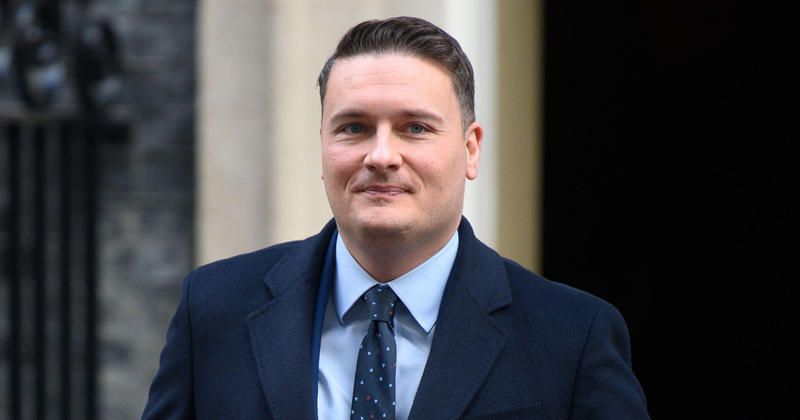
The white paper is co-signed by the health secretary Wes Streeting, but Bird said there was “a lot to unpick, but it doesn’t feel yet like we’ve got the health bit of this system quite nailed”.
New ‘experts at hand’ service
Plans include a new £1.8 billion “experts at hand” service, aimed at boosting availability of external support for schools such as educational psychologists and speech and language therapists.
Bird welcomed this but said there wasn’t yet clarity on how families could flag concerns.
“Do you complain to health? Do you complain to the school? It’s really not clear what that is for families.”
The government has told councils and health bosses to begin planning their “experts at hand” offer. Guidance is due in the spring.
Documents seen by Schools Week request areas provide a “defined route” for mainstream schools to access specialist support.
The government wants to “shift to increased group-based models and whole-setting advice and support”.
This means health and education staff can “deliver evidence-based support and intervention with greater impact and value, ensuring, where possible, needs do not escalate.
“This not only makes better use of a limited workforce but also reduces dependence on costly, individualised provision.”
There should also be “effective joint commissioning” between councils and integrated care boards, “including strategic planning and co-production”, the documents added.
But areas have flexibility in how they commission or employ the expert workforce.
Options they are encouraged to explore include deployment through “special schools and colleges, alternative provision schools, neighbourhood health services, best start family hubs and multi-disciplinary family help teams”.
Whatever the approach, they must ensure support “is not disproportionately accessed by the most proactive schools”.
Warnings over ‘patchwork’ of provision
Big questions remain around recruiting sufficient staff for the “experts at hand” service.
Sally Payne, from the Royal College of Occupational Therapists (RCOT), told MPs currently there’s a “real patchwork of different” delivery models.
““We’ve got OT who work in NHS core services, we’ve got provision being provided by local authority funded-OT, by independent practitioners.
“We’ve got that real challenge around that inconsistency. That model’s pretty unsustainable in the long run.”
Local health chiefs told MPs there should be a “national framework” on SEND, which includes metrics showing how well health services are performing.
Elliot Howard-Jones, chief executive at Hertfordshire Community NHS Trust, called for more “crunchy” data to hold authorities to account.
He said the white paper “talks more about the targeted, targeted plus and education, health and care plans, which is shifting the boundaries of the existing system rather than designing a new system”.
“It’s hoping that by shifting those boundaries we will move away from (education, health and care plans), but I think the reason why people get EHCPs is because they are frustrated with the system not working beneath that.
“Part of the framework has to be how they access that earlier and how that’s mandated.”
Education secretary Bridget Phillipson told the Commons earlier this month: “Health authorities must play their full role alongside local authorities in delivering better support.”












Your thoughts