


Ministers have said schools should only suspend pupils in the most serious cases of poor behaviour and violence, as the Department for Education looks to publish guidance for schools on the use of internal suspensions.
Internal suspensions, often referred to as internal exclusions, involve a pupil being removed from a classroom due to poor behaviour but remaining within the school. Suspensions involve the pupil being sent home.
But Education Secretary Bridget Phillipson said suspensions – which increased by 21 per cent between 2022-23 and 2023-24 – can “easily mean children retreating to social media, gaming and the online world instead of serving their punishment”.
A Schools Week investigation also found widespread use of internal exclusions, with secondary schools that use internal exclusion isolating almost a fifth of their pupils from their classmates at least once each year.
The DfE says a new framework will ensure “consistency, fairness and quality” and “strengthen the impact of suspensions, reduce exposure to social media and safeguard young people”.
But headteachers will retain autonomy over the use of both suspensions and internal exclusions, as they are best placed to make decisions, the DfE said.
And “the most serious and violent behaviour will still result in pupils being removed from the school environment and the new framework will not replace at home suspensions”.
‘Inconsistently applied’
Government said the new national framework will be included in the upcoming schools white paper, before a consultation with headteachers.
Internal exclusions are currently “informal and inconsistently applied”, the DfE said.
Pupils can sometimes be set “generic work that does not support learning or reintegration” when they were internally suspended, but internal suspension should be a short, structured intervention with meaningful learning and time for reflection”.
It comes after parents of children who were internally excluded told Schools Week their children felt “imprisoned” and became “selectively mute”.
Suspensions have ‘huge impact’
Education Secretary Bridget Phillipson said: “Time out of school doesn’t just disrupt learning – it can have a huge impact on a young person’s life chances.
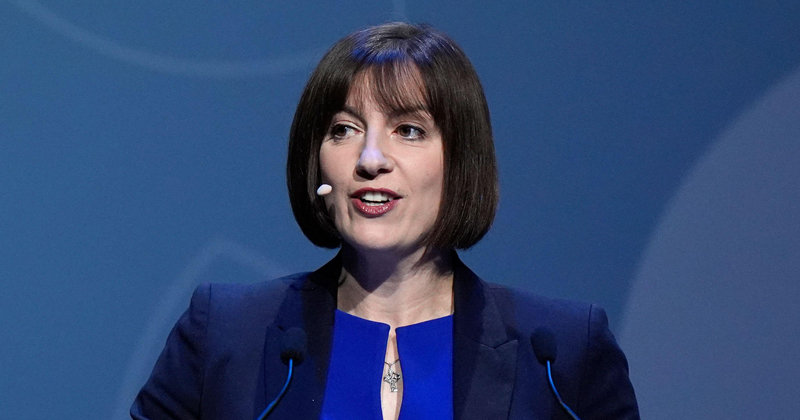
“Suspensions will always play a critical role in helping heads manage poor behaviour, but time at home today can too easily mean children retreating to social media, gaming and the online world instead of serving their punishment.
“That has devalued suspensions and led to high levels of lost learning.”
It comes as the DfE has toughened up guidance on the use of mobile phones in schools, stating that schools should be mobile-free zones “by default”.
A consultation on the suspensions guidance will be launched later this year.
‘Heads know their schools best’
Paul Whiteman, general secretary of school leaders’ union NAHT said suspensions are “nearly always a last resort” and that schools work “incredibly hard to minimise suspensions”.

Whiteman said: “It is reassuring to note that it will still be down to headteachers to decide what form suspensions take as they know their schools and pupils best. They will know best what response is likely to have the best impact.
“Many schools already use internal suspensions as one of their tools for managing unacceptable behaviour and this framework could bring more consistency across schools.
“However, any suggestion that this should become the default position for all suspensions raises a range of important questions, including how schools will be able to supervise those and whether or not all schools have space to make that work.”
Legal experts have also cited concerns about using internal suspensions.
Ane Vernon, partner at law firm Payne Hicks beach said while it is a “good idea in principle” she is “concerned that in practice we will see an increased use of pupils being placed in seclusion rooms – a practice which raises its own safeguarding and human-rights concerns”.
And Philip Wood, principle associate at Browne Jacobson, said “given that few schools currently track the use of internal suspensions, there may be concerns about the extra administration and potentially investment in appropriate facilities this may involve if it becomes a new requirement”.



Firstly the data on the impact of suspension is treated very carelessly. It may be much more likely that the need to suspend is rooted in the same causes as the poor trajectory post-suspension. i would argue that the relationship is associative and not causal.
Secondly, it is so hard for schools to suspend pupils that the real underlying reasons for any suspension are unlikely to be trivial (even if the final reported incident souds that way). Not sure about academies but maintained schools with local accountability face real pressures to avoid suspension.
Finally, we need some difficult social decisions on what we actually do with pupils who do not respond to the many and varied approaches that are available. Some will continue to cause hurt and offence of a type that other children should not have to suffer. If we are about to deem internal suspension as cruel and unjustly punitive, then there is no viable alternative to suspension. The trite and insincere apologies trawled up by many implementations of restorative justice (although, yes, it is an approach which can be very successful in the right circumstances) give very little comfort to victims and their parents.