

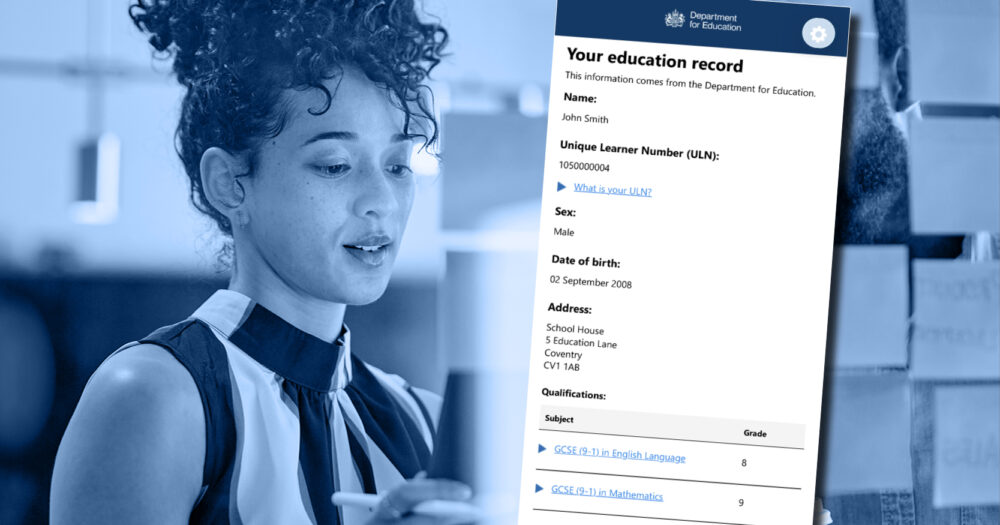
All schools, colleges and year 11 pupils in England will have the option to view GCSE results on a digital government app this summer.
The “education record” app is being rolled out nationally after a pilot in Greater Manchester and the West Midlands last year, in which only 6 per cent of invited settings took part.
If taken up nationwide, ministers believe it could save schools and colleges up to £30 million, including by getting rid of photocopying and reducing manual data entry.
Pupils will still go into school on results day to meet with their teachers and receive their grades, which will later be available on the app. It will also make it easier for students to enrol at their post-16 destinations.
If schools choose to sign up, they will have to link the pupil’s data to the youngster’s mobile phone. The Department for Education populates the records.
While only available for GCSEs currently, students will get their A-level results on the app in future.
Skills minister Jacqui Smith said no student “should have to rifle through drawers looking for a crumpled certificate when preparing for a job interview”.
“This app will give young people instant access to their results whenever they need them while freeing up teachers and college staff from unnecessary paperwork.”
Only 29 schools took part in regional pilot
When launching the pilot last year, DfE said more than 95,000 young people would get their results via the app. A total of 487 schools and colleges were invited.
But only 29 schools took up the offer, meaning the pilot only involved about 4,000 pupils. The DfE said it was run on an optional basis, and it was not mandatory for schools or pupils to take part.
DfE said it will remain optional this year before they “reflect on finding to look at next steps” for the record.
Schools and colleges will also be able to easily access information on “which students need extra support, including whether they need to continue working towards English and maths GCSEs, have SEND requirements or qualify for free school meals”.
The £30 million cost saving is based on the number of 16 and 17 year old students and the number of courses studied in 2023-24 and 2024-25. They assumed cost estimates of £10 per learner and £10 per course.
Photocopying could be ditched
“Extensive user research” with colleges identified enrolment activities that could be stopped or reduced as a result.
This included getting rid of photocopying of documentation and the manual process of matching emails with applications.
It could also reduce manual data entry and delays linked to pupils not having the correct documentation.
The savings assume that nearly all young people moving from a school into FE and apprenticeships would use the app to enrol at a new setting.
Pepe Di’Iasio, general secretary of the Association of School and College Leaders, welcomed the move as well as retaining the face-to-face option as it “not only allows them to celebrate with peers and teachers, but also to receive any advice or support they may require regarding next steps”.
He added: “We are sure that school and college leaders will also welcome the administrative savings made possible as a result of this change, although this will only amount to a drop in the ocean compared to the funding pressures they remain under.”
But Elizabeth Anderson, chief executive of the Digital Poverty Alliance, pointed to their data which found one in five children are in digital poverty.
She added: “The introduction of the Education Record app assumes that all teenagers will have access and, without proper consideration, will only heighten the digital divide. There will also be a set of young people using older devices that may not be secure, risking cyber or data breaches, simply for checking their exam results.”
“We cannot exclude the next generation when it comes to education by pushing yet another essential service online, without the proper support in place.”











Your thoughts