
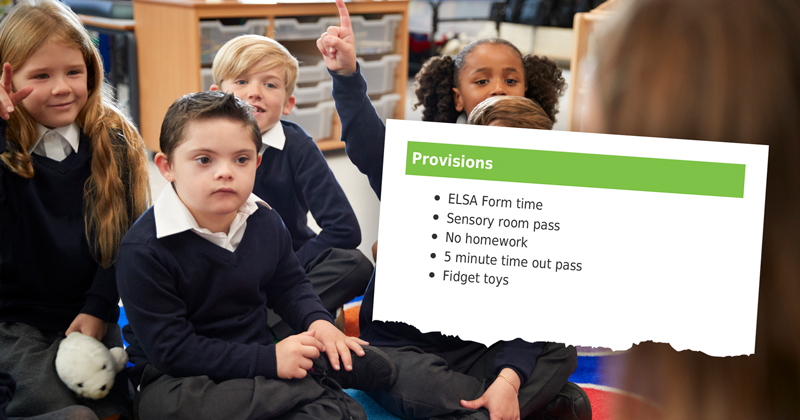
Most schools already produce plans for children with special educational needs and disabilities (SEND), data suggests, as government consults on proposals for new “individual support plans”.
Under wide-ranging government reforms announced last week, schools will have to draw up ISPs for all pupils receiving the new “targeted”, “targeted plus” and “specialist” tiers of support.
Separate education, health and care plans (EHCPs) will continue to be issued, but will be reserved for those on the “specialist” tier.
Education secretary Bridget Phillipson said ISPs should create “EHCP-like support without the fight to get that EHCP”.
According to a Teacher Tapp poll of special educational needs coordinators (SENCOs), just 11 per cent of 503 respondents said their school did not write individual plans for pupils with SEND, but without an EHCP.
More than half (57 per cent) said plans were created for all SEND pupils, while 27 per cent said plans were created for some SEND pupils.
While leaders have welcomed the move to a more uniform approach, others have warned there should be some flexibility to create systems that work for their specific contexts, with support for a smooth transition of plans.
Flexibility to help smooth transition
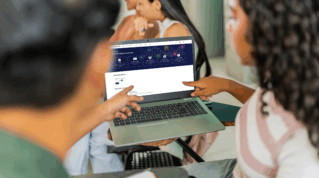
Astrea Academy Trust creates support plans for all pupils with SEND across its 26 schools in South Yorkshire and Cambridgeshire through an online portal.
Ryan Purdy, SEND and AP lead at Astrea, said plans were “person centred”, beginning with pupils and parents filling out a form outlining their details, specific needs, medical conditions or diagnoses and exam access requirements.
The plans also set out specific targets for the child and evidence-based practice which could help support specific needs.
“There could be hundreds of children on one school’s SEND register, so having ready access to evidence-based and additional interventions can really help make the process more effective and efficient for those children,” Purdy explained.
At Jeavons Wood Primary in Cambridge, pupil passports are issued to the 15 per cent of pupils on its roll with SEND.
Headteacher Em McMurray said the passports were a “really good way of capturing the needs of a child on a page, that made it practical, personal and something that everybody could use”.
As at Astrea, the passports give a breakdown of a pupil’s strengths, gaps in learning, the interventions they should have and targets.
But McMurray said an important aspect of the plans was how easily they can be adapted.
“This is very much a live document that influences what we do on a daily basis, and I think that’s where the power is,” she said.
Letting pupils voice interests
At Endeavour Learning Trust, which has 10 schools across the north west, SEND pupils have a “targeted learning plan” as well as a pupil passport.
While the targeted learning plan involves all information on the child, the pupil passport constitutes the “student voice” and is put together by the pupil and school’s SENCO.
Here, a pupil may be able to voice their interests on a specific topic, which teachers can then use in the classroom.
Donna Waring, the trust’s director of SEND, said the plans had “raised the profile of SEND”, particularly for their secondary school teachers.
“Where they may see 300 children in a week, we just need to be really specific at what their targets are and how that can be translated into the lessons,” she explained.
Universal document
Warring said ISPs could help with transitions between phases too.
“A secondary school could have 30 feeder primaries, and if they’ve all done something different, you’ve got parents coming and saying ‘have you got all about my child yet? Or have you got my pupil passport?’
“And I think having that universal document would be really useful.”
But she added that government should make it clearer how ISPs are going to look, and that there should be “the option for individual schools to add on specifics that they want to make it relevant to the context of their schools”.
McMurray said standardising practice would be useful for her school, and sharing good practice between schools “might take some of the fear” out of the prospect of creating the new plans.
“It might be a few functional boxes changing but I think the bones of it would be consistent with what we’re already doing.”
Purdy added: “There will be an administrative task in transferring across the data for each child on to a new system, but also some benefits such as in portability or transferability of plans which will share a uniform format across the country.”







Your thoughts