

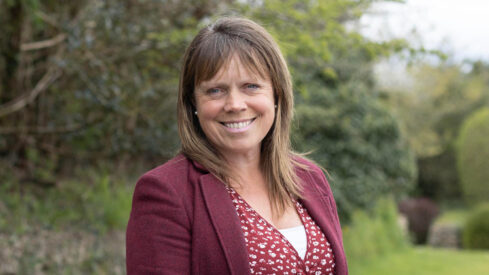
When Dr Jenny Blunden took the reins at Truro and Penwith Academy Trust, one of the first things she was told was “the children from this estate are never going to be able to achieve much”.
That opinion from a staff member triggered Blunden’s fight against complacency and she has worked to boost expectations across the MAT.
She has overseen the trust’s transformation from running three ‘inadequate’ schools dotted across the southwest, to it becoming one of the region’s largest operations.
Her influence has also grown as she sits on various national and regional boards.
However, Blunden holds a “healthy scepticism” about the government’s RISE school improvement scheme and believes Labour’s vision for the sector has been “missing” since it took charge of the country.
And after it was announced trust inspections could start next year, she warned Ofsted must not homogenise England’s MATs.
School visits
We meet at Schools Week’s London headquarters.
During a normal working week, Blunden spends half of her time at her trust’s central base at a Truro business park, which counts architects, a pizzeria and the Women’s Institute as its neighbours.
“I like to make sure that I’m out visiting schools, meeting staff across our organisation,” she says.
“Sometimes it’s just to catch up, sometimes it’s about being able to monitor some of our targeted support schools.”
The 49-year-old does “quite a lot of system work” with the likes of Cornwall Education Partnership – a group of education providers and stakeholders – for which she’s led a project to boost attendance.
She’s also a member of the Department for Education’s southwest advisory board.
Conservation work
Blunden spent her childhood in the New Forest. Her father was a civil servant, her mother a “housewife”.
She studied at the University of Surrey where she read a PhD in education and sustainable development. But despite securing her teaching qualifications while there, her first job after graduation was with advisory body English Nature, now Natural England.
For two years she worked as a conservation adviser, ensuring sites of special scientific interest were being managed appropriately.
Then in 2002, she began teaching. First, Blunden worked at a land-based college in Hampshire, teaching countryside management and environmental science.
She then moved to Truro and Penwith College where she eventually became the director of its teaching school.
In 2015, Blunden took the reins at the Truro and Penwith Academy Trust. It had three schools, all rated ‘inadequate’.
She explains the schools were “all over the place” geographically which she believes was because “the DfE just wanted to find someone who would take three broken schools and be able to support them”.
While it started as a turnaround trust, Blunden decided the MAT needed to bring in ‘good’ schools to “raise expectations”.
And that decision was partly driven by her colleague’s claim that children from a particular estate would “never achieve much”.
She adds: “That was the trigger for me to say, ‘No, we’ll fight that.’ They no longer work at that school.”
Building trust
Blunden assured the staff at incoming schools they would be “valued and not just told what to do”.
Some of her heads had worked with her during her stint at the teaching school, so they “had some trust in me that we really did believe in collaboration”.
Slowly, Blunden says, staff began to feel differently about their schools, as they were “surrounded” with “positive thinking, people who have high expectations and are doing a brilliant job”.
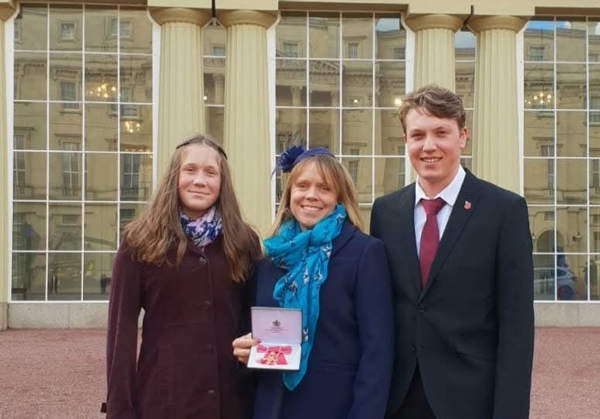
Today, Truro and Penwith Academy Trust runs 35 academies across the southwest.
Three joined from the troubled Adventure Learning Academy Trust (ALAT) following allegations by a BBC Panorama investigation that the trust and sister trust Bright Tribe had falsely claimed building and maintenance grants.
Meanwhile, six more schools are set to join next month following the completion of a merger with another chain.
Second-home squeeze
Two years ago, Schools Week revealed the trust was in talks to secure “special case” government funding to boost the viability of one of its academies, the Cape Cornwall School.
Accounts show the secondary’s deficit more than doubled last year to £671,000 due to a failure to balance the books amid declines in population caused by a surge in second-home ownership.
Blunden says negotiations “failed to get any support from the government” for the “tiny” school.
Her trust has already “done everything [it can] educationally”, having improved standards, secured an Ofsted ‘good’ rating and boosted its standing in the community.
She adds: “We want to keep the school open but it’s a massive drag on our finances because it’s got a deficit.
“We think we’d be able to get to a point where we can make sure the school is operating within its means. What it can’t do is pay back a massive deficit.”
Cash strapped
Blunden admits the rest of the MAT has been feeling the pinch in recent years.
“We’re a prudent trust,” Blunden stresses. “We’re not spending money willy nilly – we’re just struggling to make it work.”
She says the level of “small school relief” offered by the government is not at the level set 10 years ago. Labour’s decision to scrap the trust capacity fund (TCaF) has also had an impact.

The scheme was used to help MATs develop capacity and take on underperforming schools, particularly in left-behind parts of the country.
Truro and Penwith secured TCaF support to aid its rollout of iPads across the trust for year 5s and above.
Before taking on new schools, Blunden now worries “how we’re going to afford to do that piece of work” if they’re lacking “significant reserves”.
“And then you layer on one of the big costs for all of our schools, [which] is special educational needs,” she continues.
“There is a big gap between what comes in – for example, from EHCPs – and the provision that is being put in place in schools to have safe and good support, which is not affordable long-term.”
Blunden says the trust is trying to “think differently” to make finances work. It’s seeking to market its school improvement services to other trusts for a fee and has also trialled “nurture groups” in its primaries.
These are separate classes run by teachers or higher-level teaching assistants that “children can access for part of a day” for group work.
This is designed to put an end to TAs “taking out small groups of pupils to do interventions”.
Blunden adds: “Where children need to access different provision or additional support, it’s done in a more structured way in a separate class.
“We can’t afford lots and lots of general TAs, but we can potentially have something that’s more of a specialist provision that children can access … [and] still be part of their mainstream classrooms.”
Lack of vision
Blunden is critical of Labour – she says a wider vision for the sector has “been missing” since Keir Starmer moved into Downing Street.
Since taking office in 2024, ministers have launched the RISE school improvement programme, kicked off new Ofsted inspections and moved ahead with the schools bill.
But a government white paper which is expected to set out plans for SEND still hasn’t arrived.
She says: “The white paper needs to draw it all together into a coherent narrative. There should have been a white paper up front and then all of these changes introduced after.”
Blunden sits on a RISE operations group as a representative for the southwest. Dr Tim Coulson, the DfE’s director general for regions group, is a member, along with other school leaders.
Despite her close involvement, Blunden has a “healthy scepticism” of the RISE programme. Whether it can deliver “really strong, coherent impact over time will be the test”, she says.
She also urges caution over planned Ofsted inspections of multi-academy trusts, which could begin from September.
“I hope that we recognise diversity is good and don’t end up getting a very uniform [idea of] how a trust looks and feels in terms of context and shape,” she says.
“What we have at the moment is a really healthy diversity in the country. That helps with innovation and support for our schools.”









Your thoughts