

A few days after she was appointed as academies minister in 2021, officials described to Baroness Diana Barran the severity of a key item in her in-tray.
“This is your Grenfell, minister.”
They were describing the RAAC crisis that has now blighted hundreds of England’s schools.
Huge sheets of reinforced autoclave aerated concrete installed decades ago were sat above thousands of children. If water gets into the material, its metal reinforcements rust, causing it to fall down as one piece.
Barran recalls the “peace time” during 2022 and early 2023, when she agreed that the department would offer free surveys to all schools where staff thought they might have the crumbly concrete and then replace it, before the dramatic “war time”.
In the summer of 2023, three “low risk” planks collapsed. Thankfully no one was harmed, but this kickstarted a chain of events that dominated newspaper headlines for months.
More than 100 schools were told days before the start of the academic year to close entirely.
Few will have forgotten then education secretary Gillian Keegan’s ‘hot-mic’ moment, in which she was recorded asking why she wasn’t thanked for doing a “f***ing good job”.
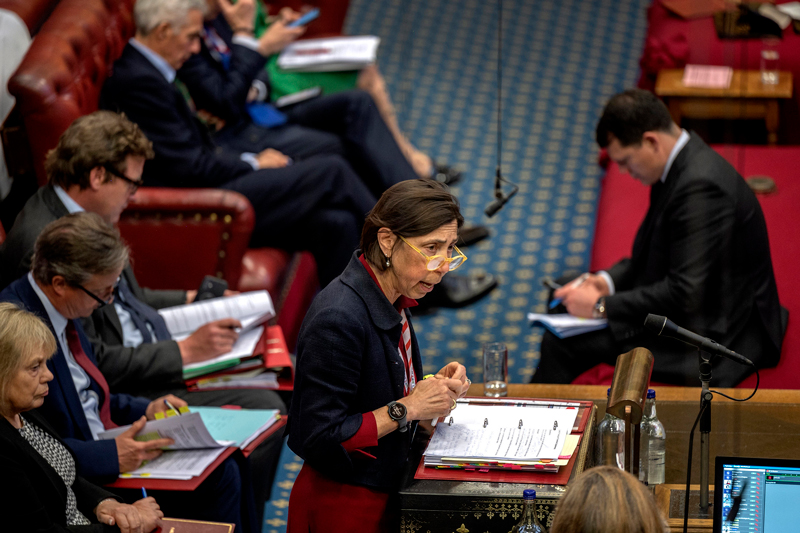
But while admitting others may disagree, Barran believes the government’s response to the crisis was one of her proudest moments.
She visited every school that couldn’t teach on-site while facing remedial works.
“There was a very difficult school with autistic children and I went there several times and met with the parents,” she recalls.
“I don’t know whether it did any good or didn’t do any good, but I just felt the decent thing was to look them in the eye because if you’ve got a severely disabled child, school closing is just much more than school closing.
“They had terrible worries about whether the children would be able to go to another setting – it was really, very difficult. I think we behaved as decently and as humanly as I knew how.
“We might have been able to do it better, but it was as good as I knew how.”
Resisting the churn
During a period of huge churn in education ministers towards the end of the last Conservative government, whether you agreed with her policies or not, Barran became a consistent face in Parliament for the sector.
She served as minister for the school system from September 2021 until the general election in 2024.
“I think if I put myself into the shoes of civil servants, it must be so frustrating when ministers change every five minutes, I had five secretaries of state in three years. Admittedly, three of them were very short, but even so, it’s far from ideal.”
She quickly earned a reputation for hard work, not something always considered synonymous with the public reputation of the House of Lords.

In 2022, during the dying days of Boris Johnson’s government, she was tasked with introducing the schools bill – a proposed blueprint for academy system reform.
Former academies ministers joined a cacophony of opposition, and after long debates and late nights in the chamber, the bill was finally dropped by Rishi Sunak’s administration.
After the 2024 election, fellow peer Lord Leigh of Hurley described Barran as “one of many Lords ministers who quietly got on with their job to improve people’s lives without fuss, seeking credit or even pay”.
Like many other Lords, Barran did not draw a ministerial salary on top of her attendance allowance.
Barran knows the Lords like the back of her hand. When we meet, she walks us down corridors and up small staircases resembling a scene out of Harry Potter to find a tucked-away meeting room.
Although she is a Tory peer, Barran doesn’t consider herself particularly political.
“I just want to do the right thing, which I know sounds a bit cheesy.”
Charity career
Before being nominated to the Lords by then home secretary Theresa May, Barran had a long history in the charity sector.
She set up a domestic abuse charity, called SafeLives, after realising existing help was “unacceptable” as it usually expected women and children to go to a refuge. Barran believed they should be supported to stay safe in their homes.
The charity instead looked at what other support routes were available, such as having one consistent person to advise women on their options.
As well as helping to change these women’s lives, Barran said one of the things she’s proudest of was giving opportunities and jobs to those “who maybe otherwise in life might not have had them.
“I didn’t really care how many O-levels, A-levels, degrees, anybody had. And there were a number of people who were very senior at SafeLives who were absolutely brilliant and I was a part of giving them an opportunity to shine and change the world a bit.”
One of the “distinguishing features” in 66-year-old Barran’s childhood was her elderly father, a City banker who was diagnosed with dementia when she was about 11 years old.
Her Jewish mother had fled Budapest aged just 22, hours after Hitler invaded. Barran described her as coming from a “culture which felt that women could do anything”.
For instance, Barran’s grandmother had set up a business in the 19th century which only employed women.
“She was quite a long way ahead of her time,” Barran explained. “So I definitely was brought up believing there’s nothing you can’t do as a woman.”
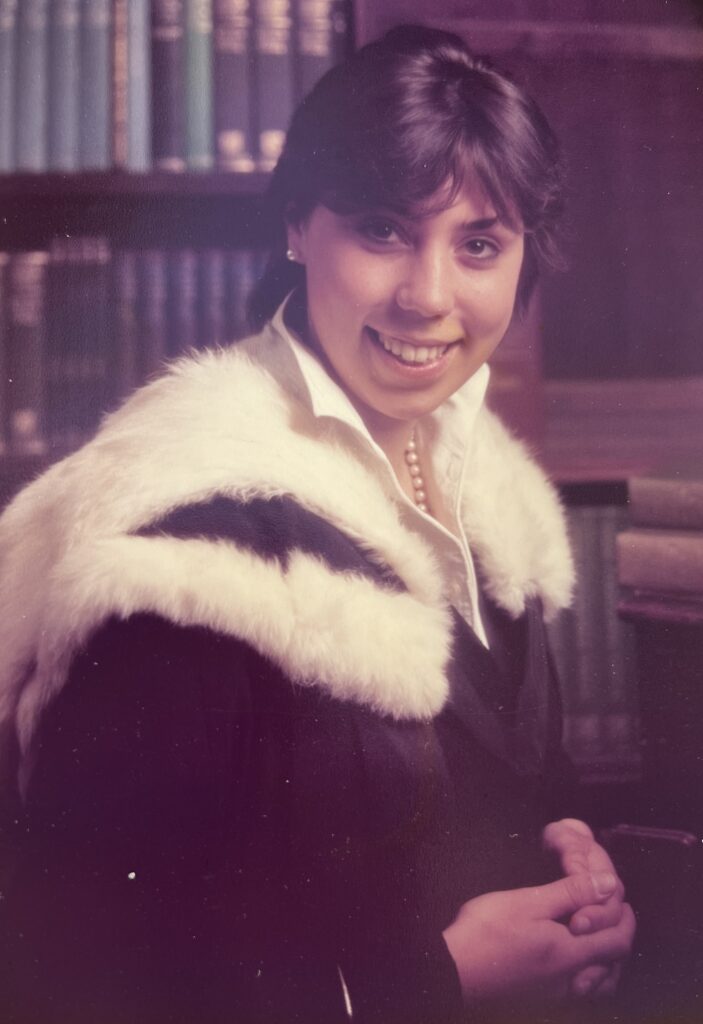
Barran studied at a Catholic convent junior school, a girls’ grammar school and then Benenden School, an independent boarding school in Kent.
“My brother was eight years’ older than me, he’d already left home, my dad was very ill. So just being around, selfishly, people your own age was good fun,” Barran says.
She initially read law at Cambridge, but transferred to history and stuck with it after her father died as she did not wish to study a four-year degree.
“I think I would have done much better at law as I have a pretty analytical brain, but I just feel actually, I’ve had so much luck in my life, I have absolutely no grumbles.”
During her first career working in investment in the City, she was one of about five women out of 800 employees who were not administrative.
But she never felt “any discrimination at all”, adding: “I always thought I was treated exactly the same as everybody else.”
Whip hand
In the Lords, Barran served initially as a government whip and then as minister for civil society.
In 2021, when she was asked to become an education minister, she was handed a “whopping” portfolio.
It included academies and multi-academy trusts, intervention in underperforming schools, capital investment, admissions, safeguarding and counter extremism, to name a few. She also became the department’s go-to minister for everything AI.
“It’s invidious to make comparisons, but it was huge. So one of things I tried to do was work out what were the big things that I was going to concentrate on.
“Some of those things you can’t choose, like the RAAC crisis. But other things I actively chose.
“I suppose the battle is not to get sucked into all kinds of micro stuff and just say, what are the things that are going to move the needle for children?”
Her big focus was on the number of children in inadequate or “double requires improvement” rated schools.
“There were about three quarters of a million children and we did a not very sophisticated back-of-the-envelope [calculation] as to how many kids you could move out of those schools.
“So bring in a new trust, the school [could] be inspected – we reckoned it was about 100,000 a year. It’s a massive thing for children to go from a failing school to a high functioning school.”
‘It was super rewarding for civil servants’
Barran said they beat their target, but it was a “journey” as civil servants were “so sceptical and not believing that I really meant that this was a real target”.
“By the end I would be getting text messages at nine o’clock on a Friday night going ‘minister, really sorry to interrupt you but last month we were at 37,000 which means we’re ahead’.
“Suddenly, it was super rewarding for them.”
She felt she was able to “unlock brilliant work” by a team of civil servants on attendance data, with more granular data now published on types of absence.
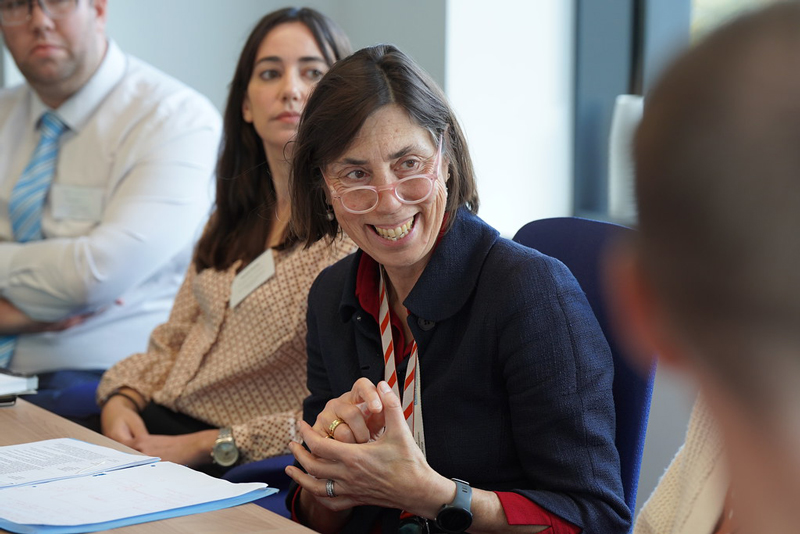
But Barran wishes she could have focused “even more on execution and implementation much earlier”.
“In the early days, you’d go into a meeting and you’d agree something. And then six months later I’d say ‘what happened to that?’. And the answer was ‘nothing’, and I thought it was happily happening in the background.
“So I became an unbelievable pain but I kept track of everything myself and then got my private office to chase it up. After a bit, people realise that you’re actually serious. When you agree ‘X’, it means that it’s done.”
Barran still keeps a close eye on academies, now serving as opposition education minister in the Lords.
Of Labour’s proposed changes, the one she disagrees with most is the removal of automatic academy orders for failing schools.
“I remember going into a school that had been sponsored and asking one of the children who was showing me around ‘what was it like a year ago?’.
“She looked at me in horror and said, ‘we wouldn’t have left you alone in the corridor, miss’.”






Your thoughts