

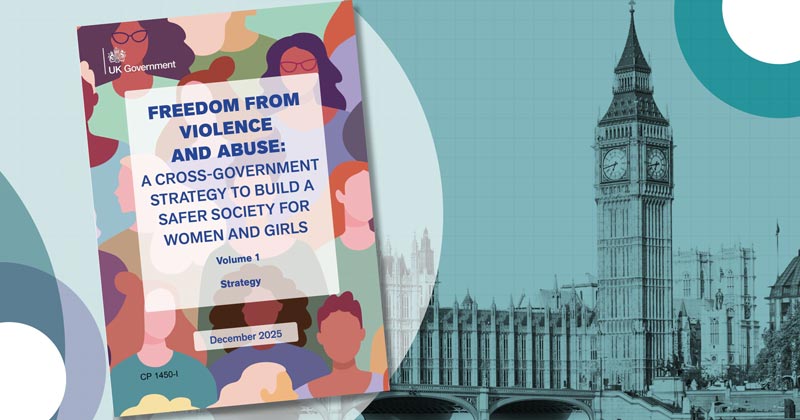
The government has announced three new pilot programmes for schools as part of the long-awaited violence against women and girls strategy.
The Home Office published its straegy this afternoon backed by a £20 million package to “stamp out misogyny and keep girls safe”, with many policies focused on early interventions in education settings.
Education secretary Bridget Phillipson said “investing in our teachers and ensuring they can respond to the realities children face today is so vital to renewing our communities, and protecting young women”.
Paul Whiteman, general secretary of school leaders’ union NAHT, welcomed staff training and support, but added that misogyny and violence against women “is a problem that reaches far beyond the school gates” and “the onus cannot just be on schools to solve”.
Here’s everything schools need to know…
1. £11 million for schools programmes
The government said by the end of Parliament in 2029, every secondary school in England will have a “credible offer for educating students about healthy and respectful relationships, with every child able to access support”.
This could be through the new RSHE curriculum, specialist training to deliver teaching in-house, working with external providers to provide whole school sessions or mentoring. Schools will be given the choice on which approach to use.
Three programmes are being launched.
The first programme is a £3million investment in a “teacher training fund” over the next two years to ensure the new curriculum “has the greatest impact”.
Schools will be selected next year. No further information was provided.
Another is a £5 million pilot of “healthy relationship training” delivered by “external providers”, the strategy added.
Further DfE investment by the end of the Parliament will “test the best approach to health relationship education and workshops, learning from these and growing the approach to deliver excellent provision in every secondary school”.
2. Pilot on tackling harmful sexual behaviours
The third programme is a “tackling harmful sexual behaviours pilot” – backed by £3 million – to “evaluate interventions directly targeted to supporting young people who display sexually harmful behaviours and teenage relationship abuse”, the DfE said.
Measures could include in-school interventions, resources or support from external providers, the DfE added.
The pilot will begin from September next year.
A new helpline will be launched in 2026 for young people to call for support if they are “displaying harmful or abusive behaviours in their intimate relationship” or towards family members.
Schools will also be supported to “integrate learning about positive relationships and VAWG across every part of a child’s school life”, so learning is not just confined to RSHE.
3. More opportunities to get men into teaching
The DfE will also work with the sector to understand and address barriers to teacher recruitment and retention. It will “create more opportunities, including for men, to enter the profession, gain relevant qualifications and build fulfilling careers”.
Last school year, 75 per cent of teachers were female, according to DfE data.
It suggested increasing the number of men recruited in early years “is likely to be positive from a number of perspectives, including providing the essential positive early example for boys to learn and emulate as they develop”.
4. Campaign for parents to ‘echo’ teaching
A campaign focusing on supporting parents and caregivers to “echo what is being taught in schools” and reinforce messages of healthy relationships will also be launched next year.
Government will collaborate with the Premier League to develop new education resources that challenge harmful attitudes towards women and girls.
And schools will take part in a major research project looking at how different organisations currently approach teenage relationship abuse.




Your thoughts