

As the sector awaits the long-delayed SEND reforms, many schools have already started doing what they expect to be asked to do in the white paper – learn from each other.
Schools minister Georgia Gould recently told The Guardian that the government wants “a system that works together, so mainstream schools are learning from the best that happens in special schools and children are in the right place for their education”.
And, writing for Schools Week, Tom Rees, chair of the Department for Education’s inclusion expert advisory group, said “mainstream, specialist and alternative provision must operate as one system, with expertise shared rather than siloed”.
As ministers announce they expect all secondary – and eventually primary schools – to cater for SEND pupils within “inclusion bases”, how can mainstream schools learn from their special and AP colleagues?
Schools Week speaks to three schools leading the way…
Complex needs
More than two-thirds of initial teacher training providers believe trainees are not adequately prepared to support complex needs in mainstream settings, according to a survey by The National Association of School-Based Teacher Trainers.
While the government looks to provide more training through a huge £200 million investment, one special school has started to share its expertise with mainstream schools within its wider trust.
Danecourt School in Medway, Kent, supports a huge cohort of 293 pupils with complex learning difficulties, autism and social emotional mental health needs across its main site and two satellite schools at Bligh Primary and Featherby Primary School.
Many MATs have opted not to take on special schools, with some leaders arguing they are “impossible” to accommodate. Lift Schools recently announced it was handing over its two special schools, which would be “best supported within a specialist trust”.
But Danecourt School, part of the Maritime Academy Trust, says its approach has proved successful.
What started as ad-hoc continuing professional development sessions has now led to a comprehensive outreach programme led by two dedicated staff members.
This involves setting up specialist hubs across the trust schools, a library of training resources for teachers and a peer-review network for SENCos.
There are in-year reviews for SEND pupils with Danecourt’s educational psychologist and termly in-reach days for partner schools to visit Danecourt and observe its classes.
‘Focusing on what children can do’
“It’s moving away from that deficit model, so really focusing on what the children can do, because those measures are now in place,” says headteacher Cathryn Falconer. “You are able to celebrate what they can do.”
At nearby mainstream Bligh, Featherby and Barnsole primary schools, around 30 per cent of pupils have an education, health and care plan.
Most of these pupils have autism spectrum disorder (ASD), or a range of communication and interaction, social and emotional needs.
Sophie Gosnell, one of the two outreach team members, says work was not aimed at removing children from mainstream classrooms, but equipping schools with “strategies to help them and support them in different environments”.
Upskilling and supporting teachers
While many teachers have completed the specialist training run by Danecourt, they are free to contact the outreach team with further questions at any time.
Pupils on an education and health care plan are placed on a “track”, which offers a bespoke developmental path depending on their level of need.
Teachers can also request an in-year review with Danecourt’s educational psychologist for struggling pupils.
This comes in the context of a long-term national shortage of educational psychologists. Medway Council has reduced its own service to “meet statutory work”, the council said.
It costs £1,800 for three in-school reviews, which is divided between Bligh, Featherby and Barnsole Primary Schools.
“We go in with a really friendly approach,” outreach team member Emma Cotton explains.
“We’re not just sat there taking notes, and we don’t just hand them their write-up and walk away.
“We see the process through, and we go back and check, ‘are you OK? Is that working? Do you need any tweaks? Is there something else that we can support with that you need?’ So, it’s that continual process that we have been offering.”
Emma Pape, headteacher at Featherby Primary, says the track system provides staff with the “reassurance and confidence to know what they are doing is right, because every teacher wants to do the right thing, but you haven’t had that experience, or you haven’t been trained”.
Christian Markham, Bligh’s headteacher, agrees.
“It’s already started to solidify what progress for certain children looks like, and to celebrate that with parents, to celebrate that with the children and the staff.”
Sharing between trusts
Teacher training is also where the story began for Addington Valley Academy’s outreach programme 18 months ago.
A new free school built in Croydon in 2021, Addington Valley supports 150 pupils with autism and complex needs.
But, unlike Danecourt, the majority of schools Addington Valley has been helping are not part of its sponsor, the Orchard Hill College Academy Trust.
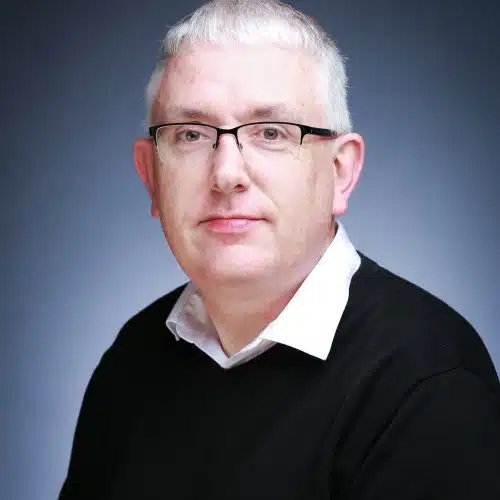
Principal John Reilly describes a “trickle” of requests from neighbouring mainstream schools to look around the school or participate in training.
“We’re quite unique here because, unlike many special schools, the environment here was built for the cohort rather than you’ve got a building and you have to make do.”
Another unusual feature of the school is training. All members of staff at Addington Valley – regardless of seniority – must complete three to four weeks of training on using specialist approaches before entering the classroom
These features piqued the interest of local leaders and, 18 months later, Reilly and vice principal for primary Anna Huzzey have supported more than 20 schools with teacher training or in setting up their resourced provision.
Huzzey remembers visiting schools and highlighting ways in which spaces could be made more SEND inclusive.
“Do we need all this furniture? What is it you actually need? What sort of resources do you have? Are they easily accessible so students aren’t having to communicate to get them?” are among the questions they asked.
“It’s all of those little things that, until you’ve done this job for a while, you don’t think about,” she says.
Individual pupil support
While much of Danecourt’s outreach has focused on upskilling teachers, it also provides individual pupil support.
The outreach team has run 20 in-year reviews for pupils struggling in mainstream settings at the request of their teacher.
The Maritime Trust has even commissioned its own educational psychologist to conduct the reviews, now in their second year.
The outreach team and teacher attend and have a conversation around the barriers and concerns around that pupil’s learning.
Focusing on individual pupil support has had some transformative outcomes.
Team member Gosnell recalls a girl at Bligh Primary who spent most of her time in the specialist hub at the start of the academic year.
She is now accessing around three-quarters of mainstream classes. At Christmas, teachers didn’t think the pupil would cope during nativity rehearsals.
“On the day that all the parents were in, she saw what was going on. She just went in, got on stage and did this performance out of nowhere,” Gosnell explains.
“I think that was the first sign for them that she does want to be involved, but it’s knowing how to be and what’s appropriate. She still does need her time, and she’s got her visuals that she can ask for in her time out.”
‘Revolutionary’ impact in AP
Focusing on how to support pupils within mainstream settings before they may need to be removed has been “revolutionary” at St Helen’s Alternative Provision service, according to its headteacher Michael Power.
Power, who took over as headteacher in September 2024, began offering visits to local mainstream schools to observe pupils who were struggling with their behaviour.
His team looks at “how we would work to keep that child in a lesson in our school”.
This includes observing pupils within class before having a “proper case discussion” around them with relevant parties.
They discuss the child’s background and home life, their behaviour presentation and what interventions could be put in place to support them.
Power recalls one of his own pupils sleeping for two hours in the morning because he had witnessed his family members arguing the night before.
“If we force him, [say] ‘you’ve got to be in class, you’ve got to learn’, we’re not coming off to having that, and then actually we’re going to have a day of lost learning.
“Helping mainstream leaders to understand that thought process, I think it’s one of the most revolutionary things.”
Pupils who have been referred to his AP are more likely to return to mainstream, Power says.
Since January 2025, he has successfully reintegrated 80 pupils from his AP back into their original schools. Before, he estimates less than five pupils were reintegrated per year.
The government has been testing a similar model of early intervention in mainstream setting with support from APs in its change programme.
It is unclear whether it will seek to build on those pilots in the white paper.
Trust between leaders
One theme became clear through each outreach example: trust between leaders.
John Smales, head of Maritime’s Barnsole Primary, says: “We’ve got very similar schools, not just in size, but the demographics. We do work very collaboratively.
“We share good things that are happening – successes. But we are also quite open and feel confident to talk about some of the barriers and the challenges we face.”
Power also wants to see leaders working closely together in St Helen’s, rather than the system seeming “desperate and different depending on where you live in the borough”.
“There can be a real habit of mainstream heads and AP and SEND heads almost being worlds apart,” he says.
“But actually, when we sit around the same table and say ‘actually, we’ve all got the same aim and it is to educate children to the best of our abilities, how could we work together to make that happen?’”
Challenges remain
But according to Falconer, capacity is a key challenge in sharing expertise.
“It would be great if we could offer even more training and people within mainstream school, but it comes down to capacity … and we’re a big special school so we need staff in here as well.
So that is a barrier, but I think, as we develop, we are looking at how we can overcome those barriers.”
Some benefits come from being part of a larger trust with more resources. Gosnell’s outreach role is paid for by the trust, and all services – other than the educational psychologist – are free of charge for the mainstream schools.
At Addington Valley Academy, Reilly and Huzzy only charge for bespoke requests that require preparation. Formal training packages over one to three days are given for free.
“We believe in our advocacy role, and that is very much a thread that runs through everything that our schools do,” Reilly adds.
Falconer adds: “These children aren’t going to go anywhere, and so I suppose we’ve got more confidence to try different things as well, because we are a team. So, we are happier to try different things, and we know it’s right for the children.”







Your thoughts