
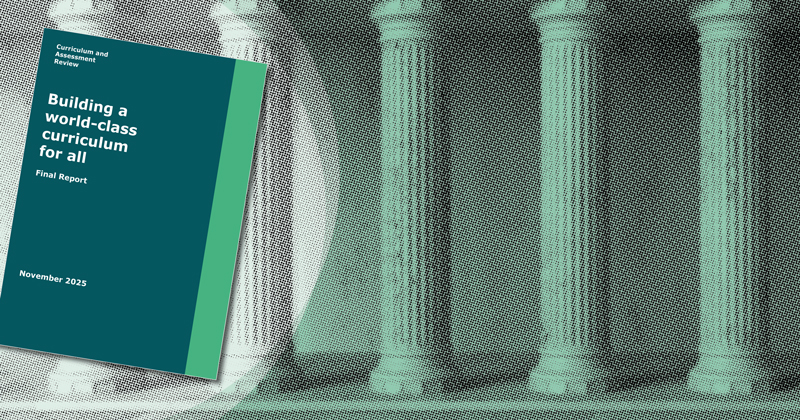
Change is imminent following the curriculum review’s publication. Tom Rose offers practical steps schools can take now – plus a few they should avoid
Curriculum change is coming. Across the country, schools are poring over the review, checking timelines and thinking about next steps.
Headlines have focused on the big shifts, and in some subjects the revisions will be substantial. New cross-curricular themes will also run across different areas of learning.
Even so, the review builds on the strong curricula many schools already have in place, so this isn’t about starting from scratch. That’s the approach we’re taking at Oak.
The Department for Education has asked us to update our curriculum and teaching resources so they align with the refreshed national curriculum.
So while the DfE revises the programmes of study, we’ve been auditing our latest resources to identify where the biggest changes are likely to fall and where we already have strong foundations to build on.
We wanted to share our reflections as many schools work through the same process.
1. Ignore the unknowns
Consider putting aside the big unknowns. There is little value trying to second guess decisions that have not yet been made.
Among the unknowns, primary citizenship is becoming statutory, there will be significant changes to RE if it shifts from being locally determined to nationally defined, and English language GCSE is to be overhauled.
There are also proposals for a Year 8 reading test and broader reforms to computer science. We simply need to wait for clarity here.
2. Guessing what’s staying the same is risky
We are avoiding the temptation to try to work out what is going to stay the same in each subject.
This will be hard to get right. The DfE response to the review makes clear that getting the right level of specificity in foundation subjects will be important, especially in foundation subjects, and all GCSEs will be updated for teaching from 2029 onwards.
Certainly, some subjects will change more than others, but we could all waste a lot of time speculating.
Waiting for the draft programmes of study and updated GCSE content and new specifications might be wiser.
3. Diversity that reflects modern Britain
We do have more clarity in some areas, though. The review is clear that the curriculum should more strongly reflect “the diversity that makes up our modern society, allowing more children to see themselves in it”.
Many schools have already taken major steps towards this.
Now is a good moment to revisit those choices and ensure they reflect this principle, both at the curriculum level, such as the selection of texts or music, and within individual resources, including the images, examples and voices used.
At Oak, one in four authors in our secondary English curriculum is a writer of colour. Images used across our slides and teaching materials are chosen to reflect modern Britain.
4. The cross curricular themes
Oracy, media literacy, digital literacy, financial education, sustainability and climate change are themes that will all run across the refreshed national curriculum.
They are built in part on the good work already happening in classrooms. Schools may have more in place than they realise.
Many have been thinking deeply about oracy, for example, weaving it into English and many other subjects, adding opportunities and tasks to support pupils to speak confidently and effectively. That’s a good foundation to build on.
Climate change and sustainability is also an area many schools have included in their curricula across science, geography and beyond.
On financial education, Oak has just released resources for over 70 lessons which provide a useful model.
5. SEND
Finally on SEND, the curriculum review is clear. It recommends evidence-led resources to support curriculum adaptation for all children, including those with SEND.
Schools could start now to engage with “accessibility by design” across their curriculum resources.
This discussion paper by Steplab is thoughtful and has helped us and many schools develop resources accessible to all learners.
Beyond this, the DfE will also be working with schools and experts to develop Curriculum in Practice resources to showcase adaptive teaching
Your thoughts