

The schools white paper has laid out that enrichment should not be a bolt-on optional extra for the confident and the well-resourced, but an entitlement for all children.
This boldness from the government is something we should be applauding. Now is not the time to be asking whether schools should focus on academics or enrichment. The answer is both.
Strong approaches to enrichment deliver academic outcomes, improved health and a whole lot more.
Enrichment provides the scaffolding that helps children build identity, belonging, friendships and self-worth, and is a powerful catalyst for strong academic outcomes as well as happy, healthy, thriving children.
Childhood and what it’s like to be a child growing up today is shifting as the pace of change accelerates amidst rapid technological advances. Simultaneously we are also seeing declines in children’s sense of belonging, wellbeing and happiness.
Schools feel this shift every day.
Friendship fallouts
We see it in attendance patterns, in behaviour that can be less about defiance and more about dysregulation, in friendship fallouts that spill from an app into the corridor, in the “KS3 dip” when motivation wobbles, and in the number of children who find ordinary school life harder to manage.
We also see the positives: many children are articulate, principled and passionately engaged with big questions. But the lesson is the same. The school experience has to evolve with childhood as it is now, not childhood as we wish it still was.
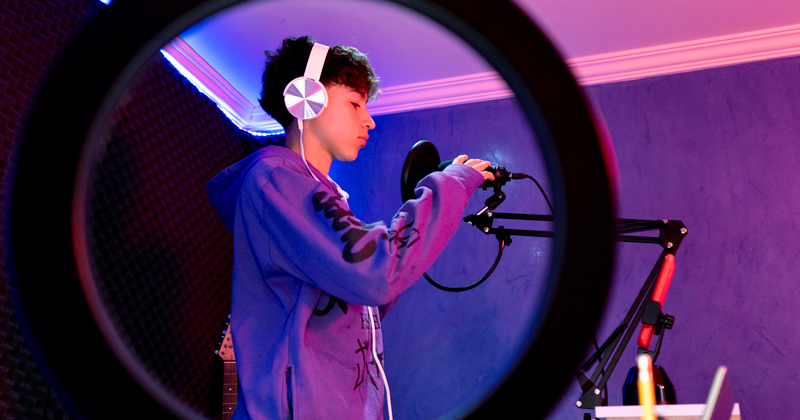
So what do we mean by enrichment? It is play, participation, performance, competition, leadership, volunteering, trips and experiences in things that help children discover and pursue their passions.
These passions could be sport, the outdoors, debating, choir, coding, chess, art, dance, drama, reading groups and the hundred other “extra” things that are, in truth, essential to childhood.
That is why I fully welcome the way in which the schools white paper has acknowledged this change.
We need to reprioritise enrichment and broaden how we define what it is for children to thrive and be healthy.
Educational ‘social’ health
When we talk about health in education, we too often default to a narrow, medicalised idea: mental health services, clinical thresholds, referrals. Those matter, but the everyday health of childhood is also social health, the texture of relationships, belonging, routines, and the ordinary joy of doing things together.
It is the ability to spend time with other people without a screen as the referee. It is learning how to talk, listen, disagree, collaborate and recover from setbacks.
There are numerous examples of where children’s engagement in sport and the arts positively impacts health.
While many believe that enrichment activities such as sports and arts “take time away” from studying, the research suggests a multiplier effect, where these activities improve the efficiency of learning.
Musical training, in particular, has been linked to improved verbal memory, spatial reasoning and literacy skills. Participation in sport is linked to improved academic outcomes.
It is essential that enrichment is deeply inclusive. A quieter pupil can find their voice on stage. A child who feels on the edge of the school community can become known and valued through a club.
If we are serious about tackling absence, rebuilding behaviour and improving outcomes, we should stop treating enrichment as peripheral.
A school that is rich in belonging is a school where children are more likely to attend, to feel safe, and to invest effort.
But government should help us do that by making enrichment a core expectation, not a postcode lottery.
It should back schools to build coherent enrichment offers that are inclusive, structured, and designed for participation as well as talent.
A school system worthy of today’s childhood shift is one that does more than deliver lessons. It builds lives.
If we want children to thrive, we have to design schools that make thriving more likely, every day, for every child. Enrichment is not the reward at the end of education. It is part of the engine that makes education work.




Your thoughts